2026 Best Tire Shredding Techniques and Benefits Explained?
Tire shredding is a crucial process in recycling and waste management. It transforms used tires into smaller pieces. This process not only reduces waste but also provides valuable materials for various industries. The demand for effective tire shredding techniques has grown significantly. As we look towards 2026, innovative methods and technologies are set to emerge.
Understanding tire shredding involves recognizing its multiple benefits. Shredded tires can be used in construction, playground surfaces, and even as fuel. However, companies must consider the environmental impact. Proper techniques are essential to ensure minimal emissions and waste.
The future of tire shredding holds promise. New methodologies may enhance efficiency and reduce costs. Yet, challenges still exist. It is crucial for industry players to address these issues. Exploring the best practices in tire shredding will prepare us for upcoming changes.
Overview of Tire Shredding Techniques
Tire shredding is a crucial process in waste management. It transforms old tires into smaller pieces. This helps in the recycling process. Several techniques are commonly used for shredding tires. Each has its own advantages and challenges.
One popular method is granulation. This technique uses machines to crush tires into finer granules. The process is efficient but can be costly. Another method is ambient grinding. It involves grinding
tires at room temperature. This technique is less expensive but may produce more dust and noise. Shredded tires can be used in various applications, from asphalt to playground surfaces.
Despite these benefits, tire shredding also poses concerns. Sometimes, not all rubber is removed. This can lead to contamination. Moreover, the energy consumption of shredding machines raises environmental questions. Companies need to reflect on improving these processes. Reducing waste and recycling efficiently should be a priority.
Step-by-Step Process of Tire Shredding
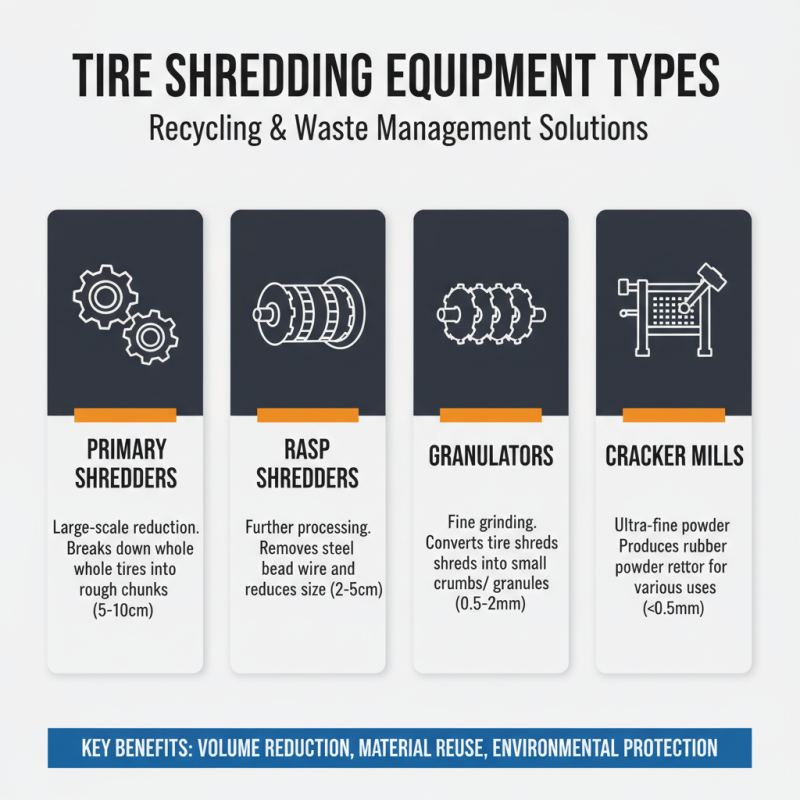
Tire shredding is a crucial process in waste management. It transforms old tires into smaller pieces for recycling or repurposing. The process typically involves several key steps: shredding, separating, and grinding.
In the shredding step, whole tires are fed into a shredder. This machine uses sharp blades to break tires into smaller chunks. The size of the output can vary, influenced by the shreds’ intended use. For example, in 2022, around 20 million tons of scrap tires were processed globally, emphasizing the importance of efficient shredding techniques.
Next, the shredded tires undergo a separation process. This removes contaminants like metal and fabric. Advanced systems use magnetic separators to pull out metal wires. This phase is essential. If not done properly, impurities can affect the quality of the end product.
Tips: Always monitor machinery for wear and tear. Regular maintenance extends equipment life. Additionally, understanding the market demand for shredded products can guide your shredding operations. Keeping up with industry standards is crucial for success. Remember to consider environmental impacts, as improperly managed waste can lead to larger issues.
2026 Best Tire Shredding Techniques and Benefits Explained
| Technique |
Description |
Benefits |
Application |
| Mechanical Shredding |
Uses rotary knives or hammer mills to shred tires into smaller pieces. |
High throughput, cost-effective, and scalable. |
Material recovery, fuel production, and aggregate in construction. |
| Cryogenic Shredding |
Uses liquid nitrogen to make tires brittle, allowing for easier shredding. |
Produces finely shredded rubber with minimal contamination. |
Rubber powder for products and high-quality recycling applications. |
| Granulation |
Involves shredding tires into granules, typically after initial shredding. |
Creates uniform rubber granulate for various uses. |
Use in sports surfaces, mats, and other end products. |
| Tire Deconstruction |
Separates components of the tire using advanced technology. |
Maximizes recovery of various materials (steel, fibers). |
Recycling and material recovery operations. |
Environmental Benefits of Tire Shredding
Tire shredding offers significant environmental benefits. Each year, millions of tires are disposed of improperly. Recycling these tires can reduce landfill waste dramatically. According to the U.S. Environmental Protection Agency, about 300 million tires are discarded annually in the U.S. alone. Tire shredding effectively diverts this waste from landfills.
When tires are shredded, they can be repurposed into various products. Shredded tires find new life in artificial turf, playground surfaces, and road construction materials. This creates a circular economy, promoting sustainability. Additionally, using recycled tire materials can reduce the need for virgin resources. This change can lower environmental impact overall.
Moreover, shredded tires improve resource efficiency. They can serve as a lightweight aggregate in concrete, reducing the material's overall weight. This innovation can lead to energy savings during transportation. However, challenges remain. Not all regions have the infrastructure for tire recycling. Ensuring access to these technologies is crucial for maximizing the benefits.
Environmental Benefits of Tire Shredding
Applications and Uses of Shredded Tires
Shredded tires have diverse applications across various industries. One notable use is in civil engineering, particularly in road construction. Ground rubber can improve the flexibility and durability of asphalt. This application can reduce cracking by up to 70%, according to the Rubber Manufacturers Association.
Another significant use is in landscaping. Shredded tires act as an excellent mulch alternative. They help retain soil moisture and suppress weeds effectively. The recycled material can also enhance the aesthetics of gardens and playgrounds. In fact, using tire mulch can reduce the need for chemical weed control.
Tips: Consider using shredded tires for drainage systems. They can improve water flow and help prevent erosion.
In sports, shredded tires are frequently used in artificial turf fields. They provide cushioning and reduce impact. This, in turn, enhances player safety. However, concerns about rubber tire material leaching into the environment merit attention. There’s ongoing research about the long-term effects on health and ecology.
Sustainable practices need constant evaluation. Not all tire recycling methods yield the same benefits. Each application should be assessed individually to ensure safety and effectiveness.