How to Choose the Best Domestic Refuse Crusher for Your Needs?
When considering a Domestic Refuse Crusher, it's essential to understand your specific needs. An industry expert, Dr. Emily Harper, stated, "Choosing the right crusher can significantly reduce waste management issues." This highlights the importance of making an informed decision.
Domestic refuse crushers can help streamline waste disposal processes in homes. They come in different sizes and capacities. Each model offers unique features, making it crucial to evaluate your household's needs carefully. Some crushers handle soft waste well, while others excel at harder materials.
Reflecting on the choices available can be overwhelming. It’s easy to focus on brand names or price tags rather than actual performance. Many consumers overlook essential details such as durability and efficiency. These elements matter significantly in the long run. When selecting a Domestic Refuse Crusher, consider reliability and user reviews to ensure you make the right investment.

Understanding the Different Types of Domestic Refuse Crushers
When choosing a domestic refuse crusher, understanding the various types is crucial. Most crushers fall into two categories: manual and electric. Manual crushers require physical effort, while electric ones offer convenience with their automatic functions. Each type serves different needs, so assess your lifestyle before making a decision.
Tips: Consider your kitchen size. If you have limited space, a compact electric crusher might be ideal. Additionally, think about the waste type. Some crushers excel at handling tough food scraps, while others work well with softer waste.
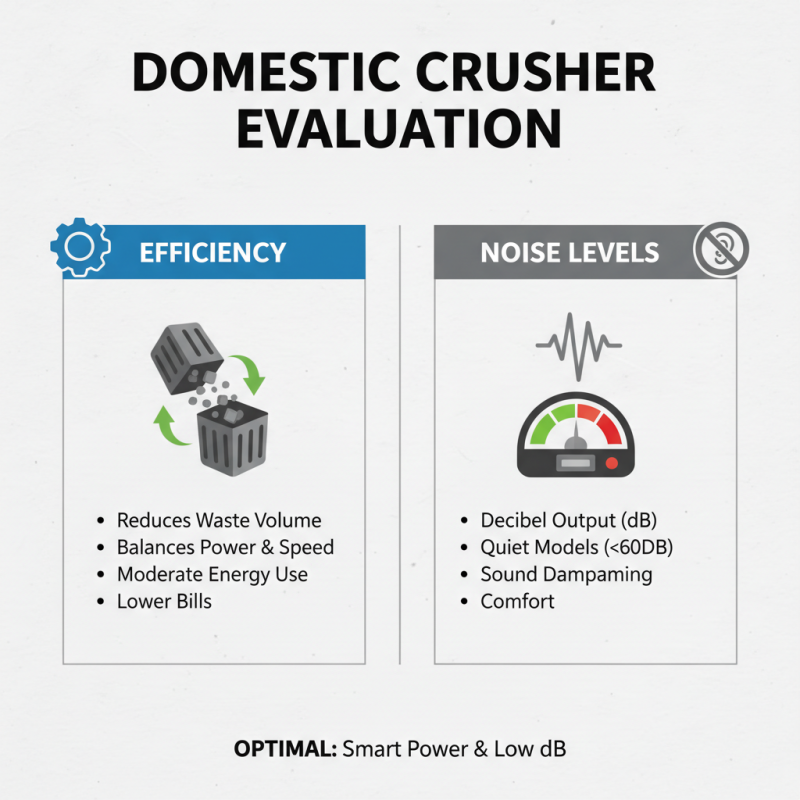
Another consideration is the noise level. Electric models can be noisy, which may disrupt daily activities. If noise is a concern, look for quieter alternatives. Remember, not all crushers are suitable for every household. Take your time to weigh the pros and cons before investing.
How to Choose the Best Domestic Refuse Crusher for Your Needs?
| Type |
Suitable Waste |
Power Consumption |
Noise Level |
Maintenance |
| Electric Crusher |
Food waste, Vegetables, Fruits |
500-800 W |
50-60 dB |
Low |
| Manual Crusher |
Small food scraps, Paper |
N/A |
Silent |
Moderate |
| Heavy-Duty Crusher |
Hard waste, Bones, Cans |
1000-1500 W |
70-80 dB |
High |
| Biodegradable Crusher |
Organic waste, Garden waste |
600-900 W |
60-70 dB |
Low |
Assessing Your Waste Disposal Requirements and Volume
Choosing the right domestic refuse crusher hinges on understanding your waste disposal requirements and volume. Every household has unique needs. Assess the types of waste you generate. Organic waste, plastics, and metals each require different handling methods. A thorough assessment helps in selecting the right model for your specific situation.
Tips: Measure the volume of waste produced weekly. This step provides clarity on capacity requirements. Consider the amount of food scraps generated versus non-biodegradable waste. Some crushers handle organic waste better than others.
Evaluate your space. A compact unit can fit in small kitchens but may handle less waste. If your household creates significant refuse, a larger model may be necessary. Keep in mind the power and noise level of different crushers. They can significantly impact your lifestyle, especially in a quiet home.
Tips: Read user reviews. They offer insights into real-life performance. Reflect on potential future changes in your waste generation as family size or habits evolve. Choose a refuse crusher that accommodates growth.
Key Features to Consider When Selecting a Refuse Crusher
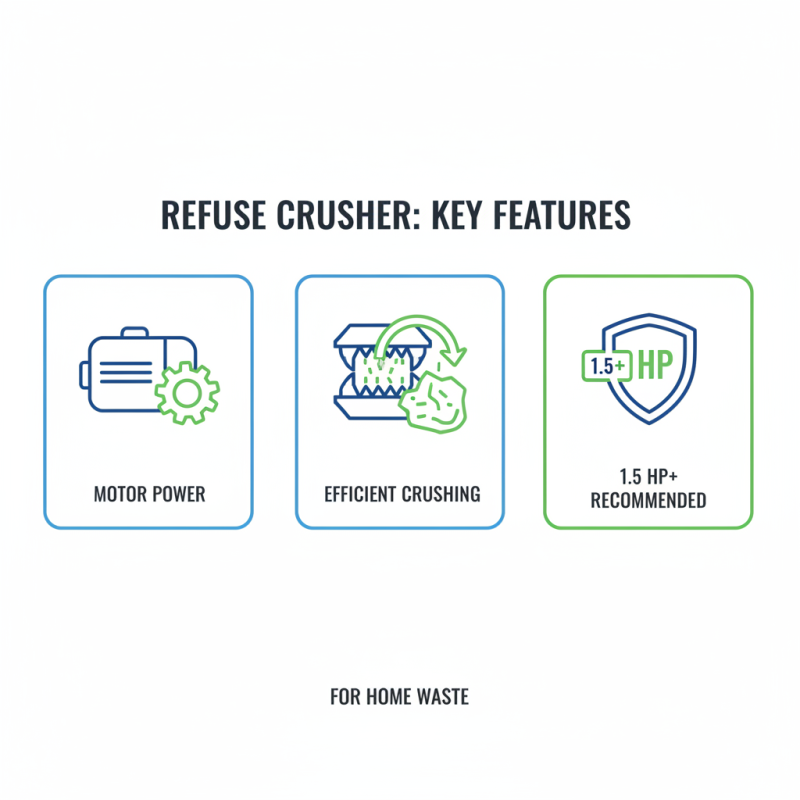
Choosing the right domestic refuse crusher requires careful consideration of essential features. One key feature is the motor power, which determines how efficiently the crusher can handle waste. A powerful motor can reduce larger debris effectively. According to industry reports, machines with at least 1.5 HP motors are recommended for households producing significant refuse.
Another crucial aspect to look at is the size and type of the waste chamber. A larger chamber allows for more waste to be processed at once. Some models offer adjustable sizes, which can be useful for varying disposal needs. Make sure to check if the crusher can handle food waste, plastics, and garden debris. Reports show that a versatile machine can enhance waste management by up to 30%.
Tips: Evaluate the noise level of the unit. Many machines operate quietly, which is a blessing in residential areas. It's also wise to consider energy efficiency. Look for models that consume less power while maintaining performance.
Finally, durable materials contribute to the lifespan of a refuse crusher. Stainless steel parts resist rust and damage. However, some cheaper models may not be as reliable over time, leading to costly replacements. Reflect on these points to find a crusher that truly meets your domestic needs.
Budgeting: Cost vs. Quality in Choosing a Refuse Crusher
When selecting a domestic refuse crusher, budgeting is crucial.
It's tempting to go for the cheapest option available, but this often leads to poor performance.
According to industry reports, quality crushers can reduce waste volume by up to 70%.
However, lower-priced models might struggle to achieve this efficiency,
leading to increased costs in the long run.
Many consumers overlook the importance of build quality. A more durable refuse crusher
may come with a higher upfront price, but it often outlasts cheaper alternatives. Research suggests
that investment in quality can yield savings of about 30% over time. Consider maintenance costs;
cheaper models often require more repairs, diminishing their initial price advantage.
While it's essential to stay within budget, don't sacrifice functionality. Reliable units often feature
advanced shredding technology, which can handle various waste types efficiently. Keep in mind
that a balance between cost and quality is vital. Sometimes, what seems like a deal
could end up costing more due to inefficiencies.
Aim for a solution that meets your needs now and in the future.