How to Choose the Right Aluminium Alloy Shredder for Your Needs?
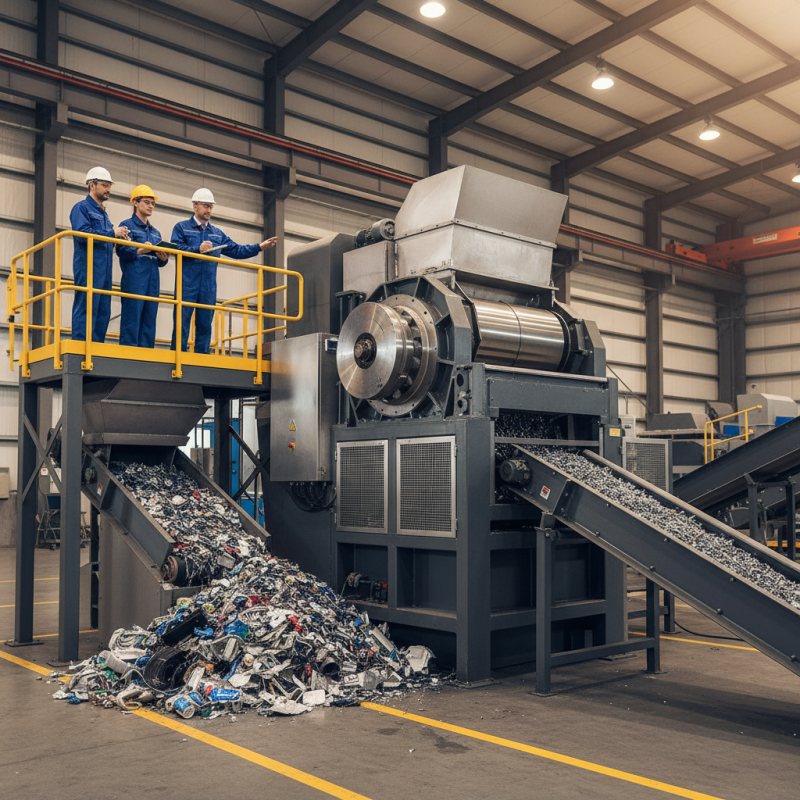
When selecting an Aluminium Alloy Shredder, it's essential to understand your specific needs. John Smith, an expert in metal recycling, states, "Choosing the right shredder can significantly enhance your processing efficiency." This statement emphasizes the importance of making an informed decision.
Different types of Aluminium Alloy Shredders serve various purposes. Some are designed for high volume, while others focus on precision. Evaluate the input size and desired output quality before purchase. Remember, not every shredder fits every scenario. Assessing your operation's unique requirements is crucial.
Many buyers overlook vital details, such as energy consumption and maintenance costs. These factors can affect long-term performance. It's wise to seek expert advice when navigating choices. Investing in the wrong shredder may lead to costly errors. Take the time to reflect on your needs for an optimal choice.
Understanding Different Types of Aluminium Alloys for Shredding
Aluminium alloys come in various types, each with unique properties that affect shredding performance. The most common types used are 6061, 5052, and 7075. According to a recent industry report, 6061 aluminum alloy is known for its excellent corrosion resistance and machinability. This makes it a popular choice for various applications, including automotive parts and structural components. It shreds well, producing consistent particle sizes suitable for recycling.
On the other hand, 5052 is notable for its formability and is often used in marine environments. It has a high fatigue strength, making it durable but more challenging to shred effectively compared to 6061. A study indicated that the shredding efficiency of 5052 can drop by up to 20% due to its toughness.
The 7075 alloy is known for its high strength-to-weight ratio. It is typically used in aerospace applications. However, its hardness can pose problems during shredding. If not properly handled, it can lead to wear on shredding equipment and inconsistent particle sizes. These nuances highlight the importance of selecting the right alloy based on specific shredding needs and machine capabilities. Choosing incorrectly can waste resources and hinder recycling efforts.
Key Specifications of Aluminium Alloy Shredders to Consider
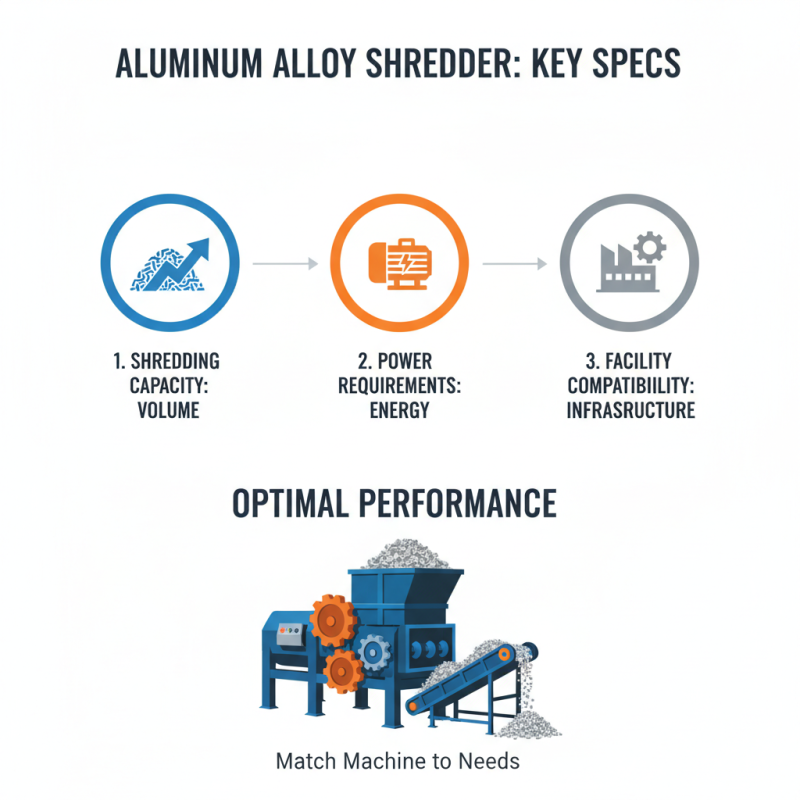
When choosing an aluminium alloy shredder, key specifications play a crucial role. Understand the shredding capacity, as it determines how much material your machine can handle at once. A higher capacity shredder could efficiently process larger volumes. However, if you don’t need to shred vast quantities, a lower capacity might suffice. Consider the shredder’s power requirements as well; ensure your facility can support the energy needs.
Another important aspect is the blade design. Sharp blades can provide cleaner cuts and improve efficiency. Dull or poorly designed blades may lead to increased wear and tear. Regular maintenance is essential to ensure optimal performance.
Tips: Always check the feed size of the shredder. Larger feed sizes can simplify the loading process. Think about how often you plan to use the machine. If it's only occasionally, simpler models might be better. Remember, not every shredder will meet your unique needs perfectly. Reflect on your priorities and what you can compromise on.
Industry Standards and Certifications for Aluminium Shredders
When choosing an aluminium shredder, industry standards and certifications play crucial roles. Compliance with recognized standards ensures the quality and safety of the machinery. The American National Standards Institute (ANSI) sets guidelines that address operational efficiency and safety concerns. These standards can significantly impact the performance and durability of shredders.
ISO certifications are also vital. For instance, ISO 9001 emphasizes quality management systems. This certification assures users that the manufacturer follows strict production processes. It can lead to better waste processing efficiency. In fact, an industry report indicated that compliant companies experience up to 30% fewer operational interruptions. This is a crucial factor when assessing long-term investments.
It's essential to consider the certifications of any potential shredder. Not all manufacturers prioritize these standards. Some may overlook them for cost savings. This approach often leads to inefficient machines that require more maintenance. Users should reflect on how that choice affects their operations over time. An investment in certified equipment can yield better results, ultimately enhancing productivity and reducing waste.
Assessing Output Capacity and Efficiency for Your Shredding Needs
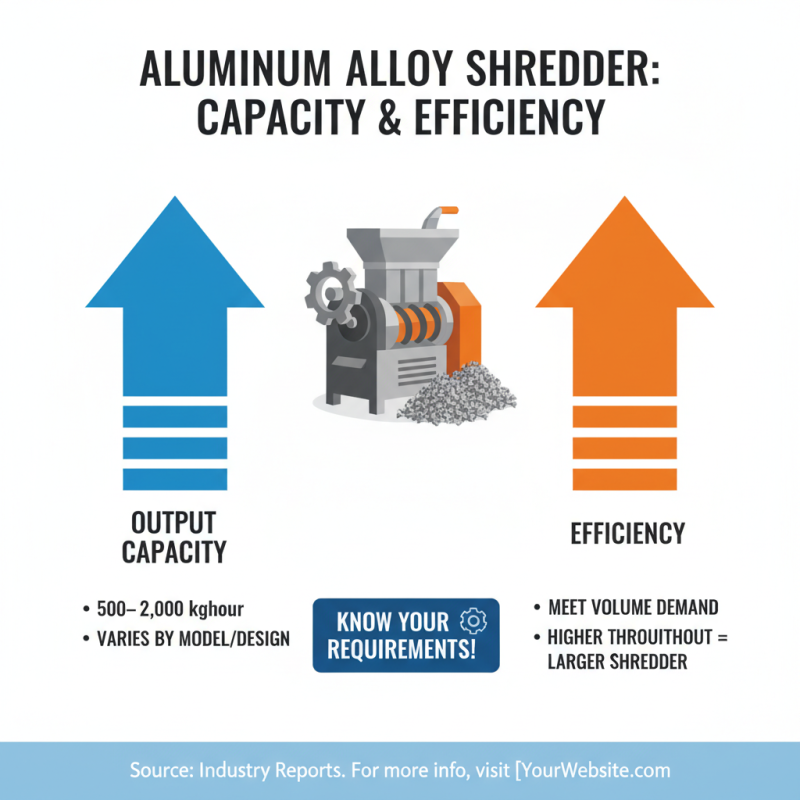
When selecting an aluminium alloy shredder, output capacity and efficiency are critical factors. Industry reports suggest that shredders can typically process between 500 kg to 2,000 kg of material per hour, depending on the model and design. Understanding your specific volume requirements is essential. If your operations demand greater throughput, a higher capacity shredder will likely be necessary.
Efficiency is often measured by the energy consumed versus the output achieved. Some high-efficiency models can reduce energy use by up to 30%. This aspect is crucial for long-term cost management. Consider the total operating costs over the shredder's lifespan, not just the initial investment. This will give a more comprehensive view of what you might pay in the long run.
**Tip:** Assess your daily shredding volume and choose a model that slightly exceeds this number to accommodate fluctuations.
Efficiency can also vary based on the material type and size. Not all aluminium alloys will shred the same way; some may jam more easily. Researching user feedback can reveal issues that statistics may not show.
**Tip:** Visit facilities using the shredder you’re considering. Seeing the machine in action can help you gauge its performance and limitations.
Remember, the right choice balances capacity with efficiency to suit your unique operation needs. Not all options will perfectly meet expectations right away, so be prepared to adapt.
Exploring Maintenance and Durability Factors in Shredder Selection
When selecting an aluminium alloy shredder, maintenance and durability are vital factors. Regular upkeep is essential. Neglect can lead to performance issues. Approximately 30% of shredders fail due to poor maintenance practices, according to industry reports. Ensuring routine checks can enhance the lifespan of the machinery. Simple tasks, like blade sharpening and lubrication, significantly affect performance.
Durability depends on the materials used in the shredder. High-quality steel components increase resilience. According to a study from the Shredder Manufacturers Association, shredders with high wear-resistant alloys can last up to 50% longer than standard models. This investment pays off in the long run. Users often overlook the importance of durable designs. However, selecting the right alloy can reduce wear and tear.
Consider the operating conditions as well. Shredders in harsh environments need more robust features. Dust and debris can cause wear. Regular inspections can help identify potential issues early. Staying on top of these factors leads to better efficiency and reduced downtime. Small oversights can lead to bigger problems later. Make wise choices for better performance.