Top 5 Aluminium Alloy Shredders for Efficient Recycling?
In today's recycling landscape, the demand for efficient solutions is rising. One critical tool in this process is the Aluminium Alloy Shredder. These machines play a vital role in breaking down metallic materials for reuse. They contribute to resource conservation and minimize environmental impact.
Selecting the right Aluminium Alloy Shredder can be challenging. Each model has unique features and specifications. Some might be more efficient than others in particular applications. It's essential to consider various factors, like power consumption and output capacity. A poorly chosen shredder may lead to wasted efforts and resources.
Furthermore, the market offers numerous models. Some are well-designed but may not fit all operations. Performance can vary widely based on brand or model. Careful assessment is needed to avoid costly mistakes. Ultimately, understanding the right Aluminium Alloy Shredder for your needs ensures a more effective recycling approach.
Overview of Aluminium Alloy Shredders and Their Importance in Recycling
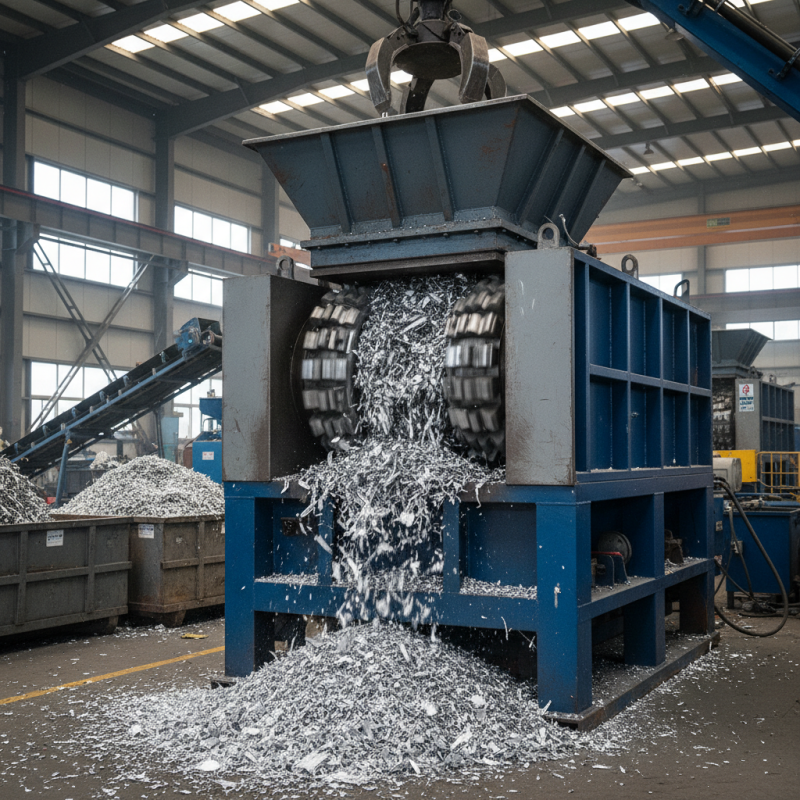
Aluminium alloy shredders play a crucial role in recycling operations. These machines break down aluminium waste into smaller pieces, enhancing the efficiency of the recycling process. According to the International Aluminium Institute, recycled aluminium saves about 95% of the energy required for primary production. This energy saving is significant, especially as global demand for aluminium continues to rise.
The shredding process also helps improve the quality of recycled aluminium. Smaller fragments are easier to melt and process, resulting in superior output. However, not all shredders are created equal. Many may struggle to efficiently handle diverse types of aluminium alloys. A report from the Aluminium Recycling Association indicates that inconsistent quality can lead to higher operational costs. This suggests that operators must select their equipment carefully.
Despite advancements, challenges remain. Some shredders may have limitations regarding throughput and durability. These issues can affect overall efficiency. Moreover, the initial investment can be high, leading to hesitation among recyclers. Ultimately, understanding the importance of selecting the right aluminium alloy shredder is vital for a successful recycling operation.
Key Features to Consider When Selecting an Aluminium Alloy Shredder
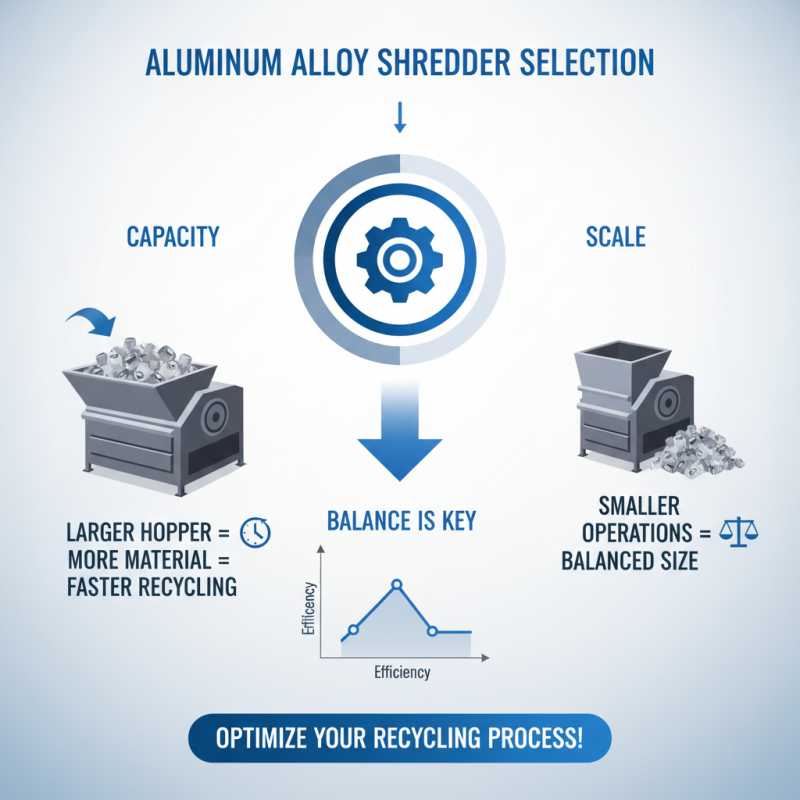
When selecting an aluminium alloy shredder, consider its capacity. The size of the feed hopper plays a crucial role in efficiency. A larger hopper can handle more material at once, speeding up the recycling process. However, a too-large shredder can be daunting for smaller operations. Balance is key.
Next, look at the power of the motor. A powerful motor ensures smooth shredding. It can handle tougher materials more easily. But, a high-powered shredder might consume more energy. Evaluate the energy costs against your output needs.
Blade design is vital. Sharp and durable blades shred more effectively. They can produce smaller, uniform particles, aiding in the recycling process. Yet, replacement blades can be an extra expense. Factor in maintenance needs as well. Consider how often you might need to replace parts.
Top 5 Aluminium Alloy Shredders: Performance and Efficiency Comparison
When considering aluminium alloy shredders, performance and efficiency are crucial. Industry reports show that aluminium recycling reduces greenhouse gas emissions by approximately 92% compared to primary production. However, not all shredders achieve this level of efficiency. Understanding their capabilities can guide better choices.
A recent study indicates that the most efficient shredders can process up to 3 tons of aluminium per hour. In contrast, lower-performing models may handle only 1 ton. The method of shredding significantly impacts the yield. Some machines can produce a finer granulate, which is vital for higher-quality recycling. This granulate can fetch higher market prices.
It's important to note that not all models are user-friendly. Some require frequent maintenance, leading to longer downtime and reduced efficiency. Data confirms that proper maintenance can increase a shredder’s lifespan by at least 30%. Many operators overlook this, negatively impacting performance. Industry insights reveal that operators should always prioritize ongoing training. Without it, even the best machines can fail to deliver the expected efficiency in recycling.
Top 5 Aluminium Alloy Shredders for Efficient Recycling
| Model |
Motor Power (kW) |
Shredding Capacity (kg/h) |
Dimensions (mm) |
Weight (kg) |
| Model A |
15 |
500 |
1200 x 800 x 1500 |
800 |
| Model B |
18 |
600 |
1300 x 850 x 1550 |
900 |
| Model C |
20 |
700 |
1400 x 900 x 1600 |
950 |
| Model D |
25 |
800 |
1500 x 1000 x 1650 |
1100 |
| Model E |
30 |
900 |
1600 x 1100 x 1700 |
1300 |
Maintenance Tips for Extending the Life of Aluminium Alloy Shredders
Maintaining aluminium alloy shredders is crucial for efficiency and longevity. According to a recent industry report, regular maintenance can extend the lifespan of shredders by up to 30%. Simple tasks like cleaning and lubrication should be part of a routine. Dust and debris can lead to overheating and increased wear on the shredding blades.
Inspecting the blades is essential. A worn blade can affect performance and increase energy consumption. Reports indicate that a 10% reduction in blade efficiency can raise operational costs by nearly 15%. Regular checks can identify issues early, avoiding costly downtime.
Operators should also pay attention to electrical systems. Faulty wiring can lead to system failures. Use thermal imaging to spot overheating components before they fail. Documenting maintenance can illuminate patterns and highlight areas for improvement. Regular training for staff on maintenance practices adds another layer of protection. Enhancing knowledge always brings better results.
Environmental Benefits of Efficient Aluminium Recycling Through Shredding
Aluminium recycling is critical for the environment. According to the International Aluminium Institute, recycling aluminum saves about 95% of the energy compared to producing new aluminum from raw materials. This energy conservation translates into reduced greenhouse gas emissions. Shredding aluminum waste before recycling speeds up this process. Efficient shredding breaks down materials into smaller pieces, making it easier to process.
Many experts highlight the importance of efficient shredders. These machines can handle various alloy types, increasing the recycling rate. For example, processing just 1 ton of aluminum can save upwards of 8 tons of CO2 emissions. Despite these benefits, some facilities still use outdated equipment. This misstep can significantly lower recycling efficiency.
Moreover, not all aluminium alloys are created equal. Some may not shred well, complicating the recycling efforts. This inconsistency can lead to contamination, harming the quality of recycled materials. Improved shredding technology can mitigate this issue, ensuring a cleaner output. Investing in better shredders makes environmental sense and can also yield economic benefits.