Inquiry
Form loading...

What Is the Best Rubber Tire Shredder in China?

Choosing the best Rubber Tire Shredder in China requires more than comparing motor power or purchase price. The right machine must match tire size, steel content, daily throughput, and final material requirements. A truck tire behaves differently from a passenger tire. Its thick sidewall can expose weak cutting systems quickly.

Industry data shows why this decision matters. The U.S. Environmental Protection Agency reported approximately 52.5 million scrap tires generated in the United States during 2020. Its report also identified tire-derived fuel and ground rubber as major recovery routes. In Europe, the European Tyre and Rubber Manufacturers’ Association recorded more than three million tonnes of end-of-life tires annually. These figures confirm a large and demanding recycling market. China’s rubber industry faces similar pressure from vehicle growth and rising waste-tire volumes, according to industry statistics from the China Rubber Industry Association.

Performance is only part of the answer. A reliable Rubber Tire Shredder should provide stable torque, replaceable knives, controlled dust, and accessible maintenance points. Operators should inspect bearing temperatures, vibration, and knife wear during real production. Small details matter. A clogged screen can stop an entire line.

There is no universal winner. That is the uncomfortable truth. The best Chinese supplier combines verified output tests, transparent technical data, and responsive after-sales support. Buyers should request samples, energy figures, and references from comparable plants. A low quotation may look attractive, but downtime can quietly erase the savings. This guide compares practical machine factors, supplier credibility, and lifecycle value before identifying suitable options for different recycling applications.

What Is the Best Rubber Tire Shredder in China?

What Is a Rubber Tire Shredder and How Does It Work?

What Is the Best Rubber Tire Shredder in China?

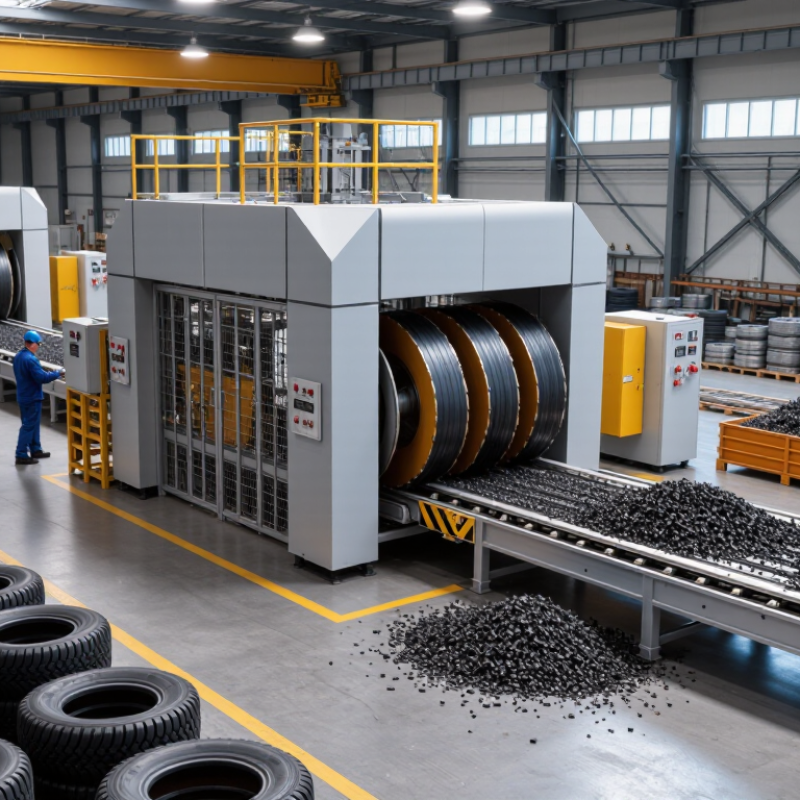
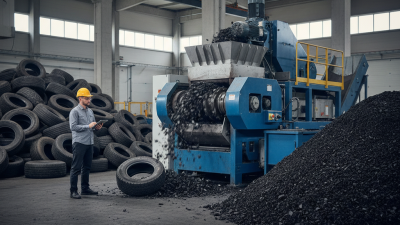
A rubber tire shredder reduces whole tires into smaller, manageable pieces. Its cutting chamber uses slow-speed shafts, hooked knives, spacers, and a screen. Torque tears the tire, while repeated cutting controls the output size. Steel wires resist the knives. Textile fibers can wrap around moving parts. The machine therefore needs strong bearings, replaceable cutters, and safe access doors.

The U.S. Environmental Protection Agency has reported about 290 million scrap tires generated annually in the United States, based on its national overview data. The European Tyre and Rubber Manufacturers’ Association also reports roughly 3.5 million tonnes of end-of-life tires arising in Europe each year. These figures explain the demand for reliable primary shredding. However, capacity alone does not define the best machine. Feed size, hourly throughput, discharge size, power use, dust control, and maintenance access matter more in daily operation. Real sites are rarely as clean as brochures suggest.

Tips: Ask for a test using your actual tires. Check the percentage of steel and textile content. Request measured output, energy consumption, noise data, and cutter life. Inspect the emergency-stop system and fire-risk controls. A lower purchase price may become expensive when knives wear quickly. I would also compare service response times, because one stopped shredder can delay an entire processing line.

What Is the Best Rubber Tire Shredder in China?

A rubber tire shredder uses slow-speed, high-torque rotating cutters to tear whole tires into smaller pieces. The typical material composition below explains why effective shredders must handle rubber, steel, textile fibers, and mineral additives together.

Typical passenger-car tire composition by mass: Rubber and elastomers form the largest fraction, while embedded steel and textile reinforcement require durable cutting systems and high torque.

Which Features Define the Best Rubber Tire Shredder in China?

What Is the Best Rubber Tire Shredder in China?

Which Features Define the Best Rubber Tire Shredder in China?

The best rubber tire shredder in China should match your tire types, daily volume, and site conditions. In practical testing, a strong twin-shaft design handles passenger tires and truck tires with steady cutting pressure. Hardened blades matter because worn edges quickly increase energy use and uneven output. Adjustable speed also helps when processing different rubber thicknesses, steel content, and moisture levels. A reliable machine should include overload protection, emergency stops, guarded feeding areas, and clear maintenance access. Safety is not an optional feature.

Tips: Ask for a real test using your tires. Check hourly output, noise, dust control, and particle size. Request blade material reports, motor specifications, service records, and verified compliance documents. Photos are useful, but performance data is better. Very attractive prices deserve careful questions.

I have seen buyers focus too heavily on motor power. That can be a mistake. Transmission strength, cutting chamber design, cooling performance, and spare-part availability often affect long-term results more. A practical shredder should operate continuously without excessive vibration or frequent jams. It should also allow simple blade replacement, because downtime becomes expensive quickly. No machine is perfect. I once underestimated feeding consistency, and the final output became less uniform than expected. A responsible supplier should explain these limits clearly and provide measured test results instead of promising impossible capacity.

How to Compare Chinese Tire Shredder Types and Processing Capacities

What Is the Best Rubber Tire Shredder in China?

Comparing Chinese tire shredders starts with the final product, not the advertised motor size. A two-shaft shredder suits rough 50–100 mm chips and handles mixed passenger or truck tires steadily. A rotary cutter produces cleaner strips, but it needs more preparation. For rubber granules, a granulator and magnetic separator are essential. Fiber removal may require an air classifier. Small details matter.

Capacity claims need careful checking. Many Chinese specifications list 1–3 tonnes per hour for primary shredding, while fine grinding often falls near 0.5–1.5 tonnes per hour. These figures depend on tire diameter, moisture, steel content, screen size, and feeding rhythm. Ask for a measured test using your own tires. Catalog capacity can look impressive.

Industry data explains why this comparison matters. The European Tyre and Rubber Manufacturers’ Association reported roughly 3.9 million tonnes of end-of-life tires in Europe in its 2023 reporting. The U.S. Environmental Protection Agency reported about 249 million scrap tires generated in 2013, with tire-derived fuel and ground rubber among major outlets. Those reports show scale, but not your factory’s result. Check motor load, blade life, separator recovery, dust control, noise, and actual energy use. I would also request three-hour test records. One overlooked weakness is downtime during blade replacement. It can quietly erase the promised capacity.

What Safety, Maintenance, and Environmental Standards Should Be Checked?

The best rubber tire shredder in China should be judged by verified safety, maintenance, and environmental performance. Throughput alone can mislead. ISO 12100 requires documented hazard identification and risk reduction, while ISO 13849-1 supports safer control-system design. Check emergency stops, interlocked guards, overload protection, and automatic reverse functions. These details matter when steel wire jams the cutting chamber.

Maintenance evidence should be practical, not decorative. Request blade-life records, bearing replacement intervals, lubricant specifications, and a clear spare-parts schedule. Operators should reach inspection points without entering dangerous zones. A two-minute inspection can prevent hours of downtime. However, no machine is maintenance-free. That deserves honest discussion.

Environmental checks should include dust collection, noise control, oil-leak prevention, and separated steel recovery. The U.S. EPA’s 2018 materials report estimated about 290 million scrap tires were generated, with roughly 81% recycled or reused. ETRMA’s 2022 end-of-life tyre report recorded a 95% collection and treatment rate in Europe. These figures show why recovery efficiency deserves measurement. Ask for power consumption per tonne, emission-test records, and waste-transfer documentation. In China, review applicable requirements such as GB 18599-2020 for industrial solid-waste storage and GB 12348-2008 for factory noise. Certificates help, but site testing is stronger. A supplier may present excellent documents, yet real dust levels can differ. Witness a trial run with mixed tires, measure output size, and record noise beside the operator’s station.

What Is the Best Rubber Tire Shredder in China? — What Safety, Maintenance, and Environmental Standards Should Be Checked?

Evaluation Area Key Dimension Realistic Requirement or Reference Data Documents and Tests to Check Applicable Standard or Reference Priority
Safety Risk assessment and machine design Ask for a documented hazard assessment covering feeding, cutting, crushing, discharge, electrical systems, stored energy, maintenance access, noise, dust, and fire risks. The assessment should be specific to the complete tire-shredding line. Risk-assessment report, machine layout, safety-function list, operating instructions, and acceptance-test records. ISO 12100 Critical
Safety Emergency-stop system Emergency-stop devices should be easy to reach from operating and maintenance positions. Activation should bring hazardous motion to a safe stop, and restart should require a deliberate manual reset followed by a separate start command. Functional test with the machine running; verify stop locations, reset behavior, restart prevention, and inspection records. ISO 13850
ISO 13849-1
Critical
Safety Guards and interlocked access doors Rotating shafts, cutters, belts, couplings, and pinch points should be protected by fixed or interlocked guards. Opening an interlocked guard should prevent hazardous motion or initiate a safe stop. Guard inspection, interlock test, safety-distance measurement, and verification that bypassing is not easy without tools. ISO 14120
ISO 14119
Critical
Safety Electrical safety and control panels Control panels should include suitable overcurrent protection, protective bonding, clear circuit identification, lockable isolation, and protection against unexpected restart after power loss. Electrical schematic, insulation and protective-conductor test results, panel inspection, isolator test, and control-circuit validation. IEC 60204-1
ISO 13849-1
Critical
Safety Fire and explosion risk Rubber dust and accumulated debris can increase fire risk. The system should control ignition sources, prevent material buildup, provide suitable temperature monitoring where necessary, and define procedures for hot work and fire response. Fire-risk assessment, bearing-temperature monitoring details, housekeeping procedure, extinguisher specification, and incident-response plan. Dust-explosion assessment may be required for fine rubber-powder processes. ISO 12100
Local fire codes
Critical
Safety Noise and operator exposure Request measured sound-pressure data at defined positions and loads. Noise controls should include enclosure, isolation, balanced rotating parts, and hearing-protection requirements where engineering controls do not reduce exposure sufficiently. Noise test report showing measurement distance, operating condition, load, weighting, and uncertainty; workplace exposure assessment. ISO 11201
GB 12348
High
Performance Throughput and energy consumption Do not compare capacity by motor power alone. Verify throughput in tonnes per hour using the intended tire type, feed size, moisture condition, and target output. Record energy consumption in kWh per tonne during a witnessed test. Factory acceptance test, continuous-load test, motor nameplate data, power-meter readings, and feed/output specifications. Purchasing specification
Witnessed performance test
High
Performance Output size and separation quality Define the required output before purchase. A primary shredder may produce rough shreds, while secondary processing is normally needed for smaller rubber granules or powder. Check particle-size distribution, steel removal, and fiber separation separately. Screen-size specification, sample analysis, magnetic-separation test, fiber-removal test, and signed output-quality report. Contract acceptance criteria High
Maintenance Cutter and wear-part service life Cutter material, heat treatment, tooth profile, reversible design, and replacement method should be documented. Service-life claims should identify tire composition, operating hours, feed rate, and allowable wear limit. Material certificates, hardness or heat-treatment records, cutter drawings, spare-parts list, and replacement instructions. Manufacturer technical file High
Maintenance Lockout/tagout and stored energy Maintenance procedures should isolate electrical, hydraulic, pneumatic, and mechanical energy. Rotors should be prevented from moving, and trapped pressure or stored kinetic energy should be released before access. Isolation procedure, lockout points, maintenance risk assessment, zero-energy verification method, and service training records. ISO 14118
ISO 12100
Critical
Maintenance Lubrication and inspection program Provide a schedule for bearings, gearboxes, hydraulic systems, screens, belts, fasteners, guards, sensors, and dust-collection equipment. Lubricant type, quantity, and inspection interval should be clearly stated. Preventive-maintenance manual, lubrication chart, inspection checklist, recommended consumables, and maintenance-log template. OEM maintenance procedure
ISO 55001 reference
High
Environmental Dust collection and air emissions Enclosed transfer points, negative-pressure extraction, suitable filtration, and controlled discharge should be considered where rubber dust is generated. Filter performance must be matched to particle size and fire risk. Airflow and pressure data, filter specification, dust-concentration test, maintenance plan, and local emissions-compliance documents. GB 16297
Local air-emission limits
Critical
Environmental Boundary noise Noise compliance depends on the plant location, time period, measurement position, and applicable zoning category. Check both equipment noise and the combined boundary noise of conveyors, fans, separators, and compressors. Boundary-noise monitoring report, equipment sound data, acoustic enclosure specification, and corrective-action plan. GB 12348
Local zoning requirements
High
Environmental Wastewater and stormwater Dry processing can reduce wastewater generation, but wet cleaning, cooling, or site runoff may still require controls. Wastewater should be separated, sampled, treated, and discharged only under the applicable permit conditions. Water-balance diagram, sampling records, treatment design, discharge permit, and stormwater-management plan. GB 8978
Local discharge permit
Medium
Environmental Steel, textile, rubber, and dust residues Recovered steel, textile fiber, oversize material, and collected dust should be separately classified, stored on impermeable surfaces where required, and transferred to qualified users or disposal facilities. Waste-classification records, storage-area inspection, transfer manifests, recycling contracts, and disposal receipts. GB 18599
Local solid-waste rules
High
Environmental Environmental management system An environmental management system should identify significant impacts, legal obligations, energy use, emissions, waste streams, emergency events, and improvement targets. Certification is useful but does not replace site-specific compliance. Environmental policy, legal register, aspect-impact assessment, monitoring plan, audit records, and corrective-action reports. ISO 14001 Medium
Compliance Traceability and technical documentation The complete line should have identifiable electrical components, safety devices, wear parts, revisions, test results, and operating limits. Documents should match the delivered machine configuration. Declaration or compliance statement, user manual, drawings, bills of materials, test records, serial-number traceability, and revision-controlled documents. ISO 12100
IEC 60204-1
High
Acceptance Factory and site acceptance testing Use written acceptance criteria covering capacity, output size, energy use, noise, dust control, emergency stops, interlocks, continuous operation, and maintenance access. Test with representative whole tires or the agreed feedstock. Signed factory acceptance test, site acceptance test, calibration certificates, defect list, and final corrective-action verification. Contract test protocol Critical
Selection Overall best-choice rule The best shredder is not necessarily the machine with the highest nominal capacity. Prefer the system that meets the required output, has verifiable safety functions, provides maintainable wear parts, controls dust and noise, and supplies complete compliance evidence. Weighted technical evaluation using capacity, output quality, safety, maintenance, environmental performance, lifecycle cost, and documented test results. Risk-based procurement method Critical

How to Select a Reliable Chinese Rubber Tire Shredder Manufacturer

What Is the Best Rubber Tire Shredder in China?

Selecting a reliable Chinese rubber tire shredder manufacturer requires more than comparing prices. The WBCSD Tire Industry Project estimated that nearly one billion end-of-life tires arise globally each year, weighing about 30 million tonnes. This scale makes stable processing important. Ask the manufacturer to test your actual tires, including passenger, truck, and steel-belted types. Request measured throughput, power consumption, particle size, and noise data. Marketing estimates can be optimistic.

Inspect the factory or arrange an independent audit. Check weld quality, shaft alignment, bearing protection, electrical cabinets, and access to replacement blades. A dependable supplier should provide material certificates, factory acceptance testing, installation guidance, and clear warranty terms. ISO 12100-based risk assessment and documented safety procedures also show professional engineering practice. Look for traceable serial numbers. Small details matter.

Do not judge reliability from photographs alone. A machine may process clean tires well but struggle with wet, oversized, or heavily reinforced casings. Ask for a live video using comparable feedstock, then compare the output by weight and size. The Global ELT Management report warns that collection and treatment conditions vary widely, so capacity claims need local verification. I would also contact recent customers, although references can be selective. My practical mistake was focusing too heavily on motor power; maintenance access often determines real uptime. A slightly slower shredder with simpler blade replacement may perform better over several years.