Inquiry
Form loading...
Choosing a Domestic Refuse Crusher for international use requires more than comparing motor power and purchase prices. Global buyers must examine waste composition, moisture content, daily volume, particle-size requirements, and available installation space. A crusher handling dry household refuse may struggle with wet food waste, textiles, or occasional metal pieces. Small details matter. A narrow feed opening can slow an entire processing line.
Dr. David C. Wilson, a respected waste-management researcher, offers a practical principle: “The right waste solution depends on local conditions.” This advice is especially relevant when evaluating a Domestic Refuse Crusher. Buyers should request performance data under realistic conditions, not only laboratory figures. Ask for noise levels, energy consumption, overload protection, blade material, maintenance intervals, and spare-parts availability. A machine that looks efficient in a brochure may perform differently beside a humid coastal collection site.
The buying decision should also include supplier experience and after-sales support. Check factory testing records, installation guidance, operator training, and references from similar facilities. Reliable suppliers explain limitations clearly. That is reassuring. Still, no crusher is perfect. Some specifications may be overlooked during early discussions, especially when buyers focus heavily on price. A careful comparison should therefore consider total ownership cost, expected service life, cleaning access, and safety features. This introduction will examine these criteria and show how global buyers can select equipment that fits real operating conditions, rather than choosing a machine based on attractive but incomplete claims.
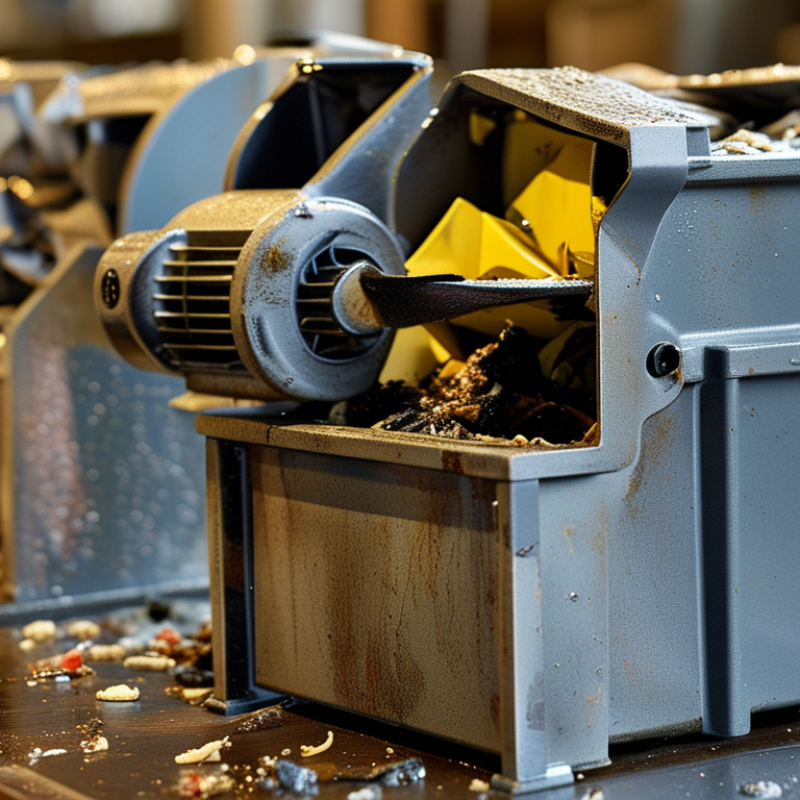
For global buyers, a domestic refuse crusher is usually selected around daily waste volume, material mix, and available power. Typical models process 0.5–5 tonnes per hour, but rated capacity is not universal. Wet kitchen waste, plastic film, textiles, and small wood pieces behave differently. Ask for capacity tests using your actual sample. This matters. A machine rated at 5 t/h may deliver less with sticky, wet feed. That gap is easy to overlook.
Core functions should include controlled feeding, primary size reduction, overload protection, and safe discharge. Adjustable cutting clearance can help manage mixed household waste. Reversible shafts may reduce jams, though they do not remove every blockage. Look for guards, emergency stops, inspection doors, and interlocked access points. A reliable control cabinet should show motor load, fault codes, and operating hours. Keep this simple. Operators need readable controls, not impressive screens.
For international installation, check voltage, frequency, motor efficiency, spare parts, and remote technical support. Confirm whether the 0.5–5 t/h figure refers to continuous or peak operation. Request noise, dust, and energy data from a witnessed test. Service access is equally important; cutters and screens need practical replacement intervals. My selection rule is conservative: choose stable throughput over the highest brochure number. It may cost more upfront. Yet an undersized crusher can create queues, overheating, and avoidable downtime. No selection is perfect. Recheck assumptions after one month of real operation.
| Selection Dimension | Typical Reference for Domestic Refuse Crushers | What Global Buyers Should Check |
|---|---|---|
| Rated Processing Capacity | Approximately 0.5–5 tonnes per hour (t/h) | Choose capacity according to the actual daily waste volume, operating hours, material composition, and expected peak load. Do not size the machine only by nominal hourly capacity. |
| Suitable Waste Types | Household refuse, municipal solid waste, packaging waste, light commercial waste, and selected bulky waste | Confirm whether the feed contains food waste, textiles, plastics, wood, paper, glass, stones, or construction debris. The crusher should not be used for materials outside its stated design range. |
| Moisture Content | Dry to moderately wet mixed waste; actual limits vary by machine design | High-moisture waste can reduce throughput, increase sticking, and cause blockages. Ask for the allowable moisture range and recommendations for wet organic fractions. |
| Feed Opening | Common small- and medium-scale designs use a feed opening sized for pre-sorted domestic waste and bulky pieces | Compare the opening dimensions with the largest expected waste items. A larger opening can reduce pre-cutting requirements but may require stronger guarding and feeding equipment. |
| Particle Size Reduction | Coarse size reduction for easier handling, conveying, sorting, or downstream treatment | Define the target output size before purchase. A refuse crusher is generally intended for reduction and preparation, not for producing a uniform fine powder. |
| Core Crushing Function | Shearing, tearing, compression, or impact, depending on the crushing chamber and rotor configuration | Shearing and tearing systems are commonly suitable for mixed, fibrous waste, while impact-based systems may be better suited to more brittle materials. The working principle should match the waste profile. |
| Drive Power | Often within the low- to medium-power industrial range; the required rating depends on capacity, rotor speed, feed size, and material density | Request the motor rating, starting current, rated voltage, frequency, and phase requirements. The electrical specification must match the destination country's power system. |
| Rotor and Cutter Construction | Replaceable wear parts made from hardened or abrasion-resistant steel are commonly used | Check cutter thickness, hardness information, attachment method, availability of spare parts, and the expected replacement procedure. |
| Overload Protection | Common functions include automatic stopping, reverse rotation, overload sensing, or mechanical protection | Overload protection helps reduce motor damage and rotor jamming when non-crushable objects enter the chamber. Confirm reset procedures and whether reverse operation is automatic or manual. |
| Foreign-Object Management | Designed protection may address occasional metal or other hard contaminants, but no crusher should be treated as immune to uncrushable objects | Use upstream sorting, magnetic separation, or manual inspection where necessary. Ask which materials must be removed before feeding. |
| Dust and Odor Control | Enclosed feeding and discharge areas can reduce dust dispersion; wet refuse may generate odor during storage and processing | Consider connection points for local extraction, dust filtration, ventilation, and cleaning. Odor control may require separate site-level equipment. |
| Noise and Vibration | Noise and vibration depend on motor power, rotor balance, foundation, feed material, and operating speed | Request measured noise data where available and provide a stable foundation. Check local occupational noise requirements and site boundary limits. |
| Safety Features | Typical safeguards include fixed guards, emergency-stop devices, interlocks, protected discharge areas, and safe access for maintenance | Verify compliance with the buyer's applicable machinery-safety rules. Operators should not reach into the feed opening while the machine is energized. |
| Feeding Method | Manual loading, skip loading, hopper feeding, or conveyor feeding may be used for small and medium capacities | Match the feeding system to labor availability, waste density, site layout, and required continuity of operation. Manual feeding may limit the real-world throughput. |
| Discharge Arrangement | Discharge may be through a lower outlet, chute, conveyor, or collection container | Check discharge height, outlet dimensions, material flow, and compatibility with conveyors, bags, bins, sorting lines, or compactors. |
| Installation Requirements | Usually requires a level foundation, adequate working clearance, electrical supply, ventilation, and safe maintenance access | Confirm overall dimensions, machine weight, lifting points, floor loading, installation method, and whether anchoring is required before arranging shipment. |
| Energy and Operating Cost | Main cost factors include electricity, cutter wear, lubrication, labor, cleaning, and downtime | Compare expected cost per tonne rather than motor power alone. A lower purchase price may result in higher operating costs if wear parts or maintenance are expensive. |
| Maintenance Access | Routine work may include chamber cleaning, cutter inspection, fastener checks, lubrication, and wear-part replacement | Look for accessible inspection covers, clear maintenance instructions, standard tools, and a documented spare-parts list. |
| Spare Parts Planning | Common wear items include cutters, counter-knives, bearings, seals, belts, couplings, and electrical protection components | For overseas operation, purchase critical consumables in advance and confirm part numbers, lead times, packaging, and technical support channels. |
| International Electrical Compatibility | Industrial supplies commonly differ by country in voltage, frequency, and phase configuration | Specify the destination-country electrical standard before production. Confirm motor nameplate data, control-panel components, cable requirements, and protection settings. |
| Documentation for Import and Operation | Important documents may include a manual, electrical diagram, packing list, spare-parts list, test record, and conformity documentation where applicable | Request documents in a language understood by the operator and customs or regulatory authorities. Check whether local certification or inspection is required. |
| Performance Verification | Capacity should be assessed using a defined waste mixture, feed size, moisture level, and operating procedure | Ask for a practical acceptance test or recorded test conditions. Capacity figures without material and operating details are difficult to compare. |
| Best-Fit Application | Small municipalities, residential waste stations, hotels, institutions, farms with permitted waste streams, and small recycling or transfer facilities | Confirm local waste regulations, permitted treatment methods, fire-risk controls, and whether the machine will operate continuously or intermittently. |
Note: The figures and descriptions are indicative industry references. Actual capacity, power consumption, output size, allowable feed composition, and safety requirements must be confirmed from the selected machine's technical documentation and the buyer's local regulations.