Inquiry
Form loading...

Top 10 PLA Shredder Suppliers for Global Buyers

PLA is gaining attention as manufacturers and waste processors seek alternatives to conventional plastics. European Bioplastics and nova-Institute reported that global bioplastics production capacity reached about 2.47 million tonnes in 2024, with PLA accounting for a substantial share. The market is growing. Yet capacity figures do not tell buyers whether a shredder will suit their actual feedstock.

A Pla Shredder is usually one step in a larger processing line. Its performance depends on material form, contamination, moisture, screen size, and the required output. PLA cups, molded parts, and production scrap can behave differently under the same cutting setup. Buyers should check throughput claims against documented test conditions, not just a supplier’s headline number. A demonstration using representative material helps. So does a clear maintenance plan.

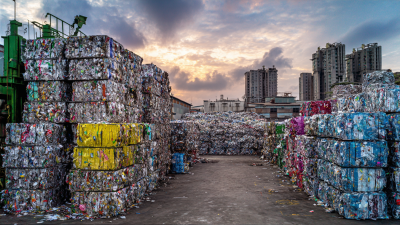
The broader waste challenge gives this equipment practical context. The OECD’s Global Plastics Outlook reports that global plastic waste reached 353 million tonnes in 2019, while only 9% was ultimately recycled. That figure covers plastics broadly, not PLA alone. Shredding does not itself make material recyclable or compostable; it prepares material for a suitable downstream route. This distinction is easy to overlook.

This guide compares ten suppliers for global buyers, focusing on equipment configuration, safety features, service access, and evidence behind performance claims. Regional support and spare-parts availability matter, especially when a line runs daily. No single supplier fits every operation. The right choice begins with the material—and a frank review of what the machine cannot do.
Top 10 PLA Shredder Suppliers for Global Buyers

Understanding PLA Shredders and Their Role in Bioplastic Recycling

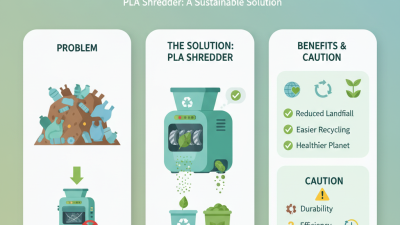
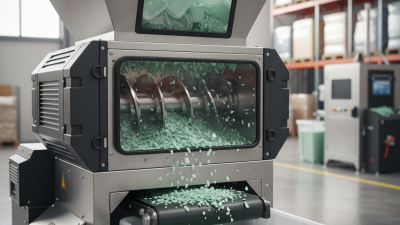
A PLA shredder prepares discarded bioplastic for further processing by cutting bulky parts into more uniform flakes. This can improve feeding and handling, but shredding alone does not make material recyclable. Operators still need to identify PLA, remove labels and foreign plastics, and control moisture before reprocessing. Heat matters: blunt blades or overfeeding can soften PLA, smear it across the cutting chamber, and produce uneven flakes. Small batches and regular blade checks help reveal problems early. Not every feedstock behaves alike.

The scale of bioplastics is growing, though market figures should not be mistaken for recycling rates. European Bioplastics and the nova-Institute reported global bioplastics production capacity of about 2.18 million tonnes in 2023; packaging represented 43.5% of capacity. Meanwhile, the OECD’s Global Plastics Outlook reported that only 9% of global plastic waste was ultimately recycled in 2019. These figures describe different material groups and measures, but they underline the need for better collection and sorting. In a recycling line, shred size, contamination, and feed consistency all affect the next step, whether mechanical reprocessing or another suitable route. PLA is not automatically compostable in home conditions, either. Processing decisions should follow the product’s actual composition and the receiving facility’s requirements.

Criteria for Evaluating PLA Shredder Suppliers

A reliable PLA shredder supplier should explain how the machine handles your actual scrap, not just quote a headline capacity. Ask about motor power, cutting-chamber size, blade material, and screen options. These details affect particle size, heat, and daily output. Request a test using representative PLA pieces, including the thickest parts your process produces. Record the feed rate and check the output for long strands or excessive fines. Results can vary with moisture, part shape, and feeding habits.

Service matters as much as specifications. Confirm blade replacement intervals, spare-part availability, cleaning access, and the supplier’s response time. Ask for a written operating guide and clear safety procedures. A polished brochure is useful, but it cannot prove performance. Test before committing. One thing buyers sometimes underestimate is noise and dust; visit an installation or ask for measured operating data where possible. Supplier claims should be treated as estimates until checked against your material and work schedule.

Tips: Bring a small sample of your own PLA and agree on a practical test protocol. Compare the output, energy use, and time needed for cleaning. Keep the test notes—even an unexpected result can reveal a useful gap in your requirements.

Top 10 PLA Shredder Suppliers for Global Buyers - Criteria for Evaluating PLA Shredder Suppliers

Use these criteria to compare supplier quotations and supporting documents. The table is an evaluation checklist, not a ranking of named suppliers.

No. Evaluation criterion What to assess Evidence to request Buyer check
1 PLA feedstock compatibility Confirm the machine is suitable for the buyer’s actual PLA waste form, such as rejected parts, sprues, sheets, or filament. Check whether the material must be clean, dry, or sorted before processing. Written material-compatibility statement; sample-processing results using representative PLA; list of excluded or restricted materials. Pass / Verify / Fail
2 Throughput and duty cycle Compare stated capacity with the intended feedstock, feed method, target particle size, and operating schedule. Ask how the quoted capacity was measured. Capacity specification with test conditions; recommended operating hours; demonstration or test report using comparable material. Match to required kg/h and shift pattern
3 Output size and consistency Check the available screen or sizing options and the expected particle-size distribution. Output size depends on the cutting system, screen openings, and material characteristics. Screen-opening options; sample output; stated method for measuring particle size; changeover instructions. Confirm suitability for the next process
4 Cutting system and wear parts Review cutter arrangement, blade material, adjustment method, and replaceable wear components. Suitability depends on the feedstock and the machine’s intended duty. Blade and screen specifications; maintenance schedule; replacement-part list and pricing; expected sharpening or replacement conditions. Check serviceability and spare-parts access
5 Motor and electrical compatibility Verify rated power, voltage, frequency, phase, full-load current, and starting method against the installation site. Electrical requirements vary by country and facility. Electrical nameplate data; wiring diagram; motor and control-panel specifications; confirmation of the buyer’s local supply requirements. Confirm with the site electrician
6 Machine safety Inspect guarding, access interlocks where applicable, emergency-stop locations, safe clearing procedures, and protection against access to moving cutters. Risk assessment; safety-device list; operating and lockout instructions; applicable conformity documentation for the destination market. Review against local workplace rules
7 Dust, noise, and housekeeping Ask whether the process generates airborne fines or requires extraction, and request measured noise data where available. Requirements depend on the material and site conditions. Noise test conditions and results; dust-control or extraction recommendations; enclosure and cleaning instructions. Assess against facility limits
8 Installation and integration Check footprint, machine weight, access for delivery, foundation or floor requirements, discharge arrangement, and compatibility with upstream or downstream equipment. General arrangement drawing; installation requirements; utility connections; infeed and discharge interface details. Confirm layout and material flow
9 Documentation and operator support Evaluate the completeness and language of manuals, maintenance instructions, troubleshooting guidance, and training for operators and maintenance staff. Sample manual; parts diagrams; training scope; available support channels and stated response process. Confirm language and support coverage
10 Warranty, service, and total cost Compare warranty scope and exclusions, service availability, spare-parts lead times, commissioning costs, and expected consumables. Terms should be checked in the written quotation. Written warranty terms; service and commissioning quotation; spare-parts list; delivery schedule; payment and shipping terms. Compare total lifecycle costs

Profiles of 10 PLA Shredder Suppliers for Global Buyers

These ten profiles offer a practical way to compare PLA shredder suppliers without treating an unverified list as a ranking. Each represents a different capability buyers may encounter. Fit depends on the material, required output size, and available maintenance support.

Profile 1 focuses on custom machines and can adapt hopper dimensions to bulky PLA parts. Profile 2 offers compact units for small production rooms. Profile 3 targets higher throughput, but buyers should request test data using similar feedstock. Profile 4 emphasizes low-speed, high-torque cutting for controlled size reduction. Profile 5 highlights replaceable blades and access for routine cleaning. Downtime matters. Profile 6 supplies shredders designed to connect with washing or conveying equipment. Profile 7 competes through regional installation and service coverage. Profile 8 provides detailed operating manuals and component specifications. Profile 9 prioritizes lower purchase cost, which may mean fewer options or longer parts lead times. Profile 10 offers pilot testing before a larger purchase.

PLA parts vary in shape, thickness, and condition, so a generic capacity figure can mislead. Ask each supplier to clarify its test method, screen size, motor rating, and expected maintenance intervals. Request a sample run when possible. Check how blades are changed, what safety features are included, and whether replacement parts are readily available in your region. A polished quotation is useful, but it cannot replace a realistic material test.

Comparing Supplier Capabilities, Services, and Equipment

When comparing ten PLA shredder suppliers, buyers should look beyond motor power. A useful machine should match the intended feedstock, batch size, and downstream process. Ask for test results using PLA parts similar in thickness and shape to your own. A small sample can reveal bridging, uneven flakes, or excessive fines. Details matter.

Equipment options vary. Some suppliers offer adjustable screens, low-speed rotors, and automatic feed controls; others provide simpler manual systems. Compare stated throughput with the material size and operating conditions used for testing. Check access to the cutting chamber, blade replacement steps, and availability of wear parts. A quiet demonstration is not the same as a full-shift trial.

Service capability can separate otherwise similar offers. Ask whether technicians support commissioning remotely or on site, and how quickly routine parts can be shipped. Clear manuals, electrical drawings, and operator training reduce avoidable downtime. Export packing and installation guidance also deserve attention. A polished quote may omit these details. This comparison is not perfectly tidy: supplier data may use different test methods, so request written assumptions and verify them before ordering.

How to Select a Supplier for Your Region and Application

Regional fit matters more than a high headline capacity. The OECD’s Global Plastics Outlook (2022) estimates that only 9% of global plastic waste was recycled in 2019. That figure covers plastics broadly, not PLA alone. Still, it highlights why buyers should ask how a shredder supports clean, consistent material recovery. Request a trial using your own PLA parts, including any labels, sprues, or rejected prints.

Match the machine to the job. Ask for tested throughput, output size, motor load, and blade-life estimates for your material. A small workshop may need a compact unit with easy blade access. A regional processor may value continuous feeding, local service, and stocked wear parts more. Check voltage, frequency, installation space, and dust-control requirements before comparing prices. A neat brochure is not proof.

Get the supplier’s acceptance criteria in writing. Ask what happens if the trial misses the target particle size or throughput. Confirm commissioning support, response times, spare-part lead times, and operator training in your region. Where possible, speak with customers processing similar PLA feedstock. Even then, results may vary. Material blends, moisture, and operator habits can change performance, and suppliers do not always make that uncertainty clear.