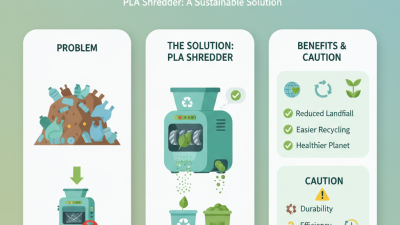
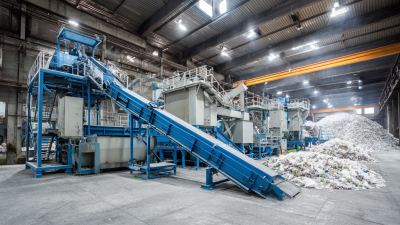
Plastic waste is growing faster than many recycling systems can manage. The OECD Global Plastics Outlook reports that global plastic waste reached 353 million tonnes in 2019. Only about 9% was recycled. These figures show why reliable size-reduction equipment matters across modern recovery facilities.
This guide examines the Top 10 Plastic Waste Shredder Manufacturers in 2026. The selection considers more than advertised capacity. It reviews rotor design, cutting technology, energy use, contamination tolerance, maintenance access, safety controls, and after-sales support. A practical shredder must process varied materials, including rigid containers, agricultural film, pipes, and bulky post-consumer waste. It should also produce consistent output for washing, extrusion, or pelletizing.
Real operating conditions are rarely clean.
Plastic film can wrap around a rotor. Metal fragments can damage cutters. Moisture can reduce throughput. For this reason, manufacturer claims should be checked against technical datasheets, customer references, and independent testing. The UNEP report Turning off the Tap: How the World Can End Plastic Pollution and Create a Circular Economy states that plastic pollution could be reduced by 80% by 2040 through systemic changes and better circularity. Shredders cannot solve the entire problem, but they support several essential processing stages.
No ranking is perfectly universal. A high-speed machine may suit a clean production line but perform poorly with contaminated municipal waste. This review therefore focuses on measurable performance, engineering experience, service reliability, and practical value. The final choices should help buyers compare equipment with clearer expectations, fewer assumptions, and a more realistic view of long-term recycling operations.
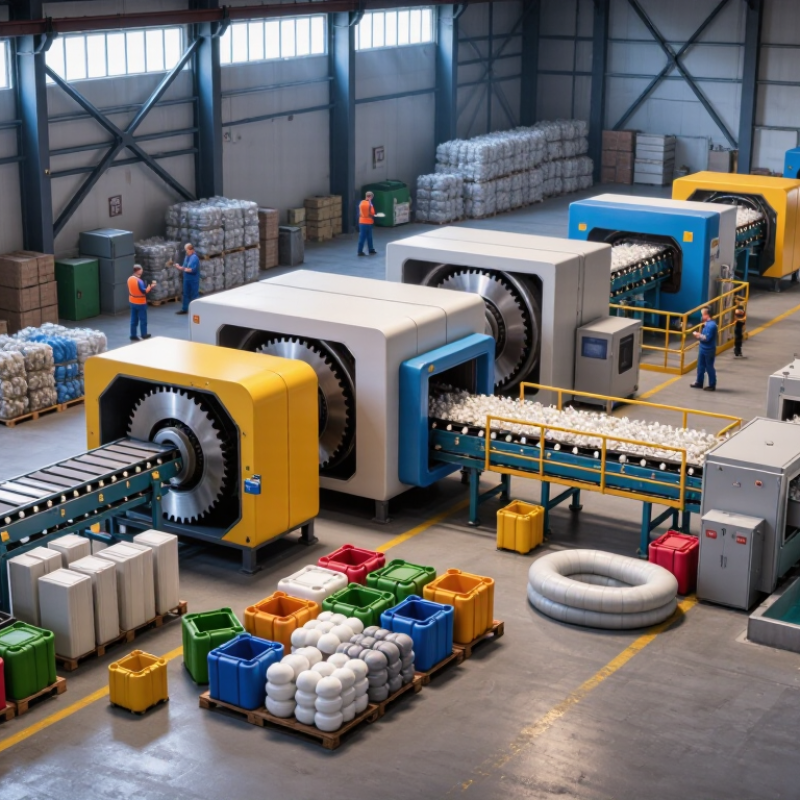
Plastic waste shredders are industrial machines that cut discarded plastic into smaller, more manageable pieces. Their rotating shafts use hooked blades, while screens control the final particle size. Different designs handle bottles, packaging film, pipes, or thick containers. One machine rarely handles everything well.
In a working recycling line, shredding improves feeding, washing, sorting, and transport. Smaller pieces expose more surface area, helping remove dirt and labels during later processing. Consistent output also supports more stable extrusion or pelletizing. However, a shredder does not make contaminated plastic valuable. Moisture, metal fragments, and mixed polymers can still damage equipment or reduce material quality.
Safety and maintenance matter as much as cutting power. Operators should check blade wear, chamber clearance, emergency stops, and overload protection. A quiet machine is not always a healthy machine; unusual vibration may signal imbalance or trapped material. Energy use deserves attention too. Oversized equipment can waste electricity when processing a modest stream.
Comparing leading manufacturers in 2026 requires more than reading motor ratings. Buyers should examine service access, spare-part availability, test results, and documented throughput under realistic conditions. Claims can look impressive. Site conditions often disagree. A practical trial with the actual waste mix may reveal weaknesses that brochures hide. Even experienced teams sometimes underestimate dust control and noise, which can create daily operating problems.
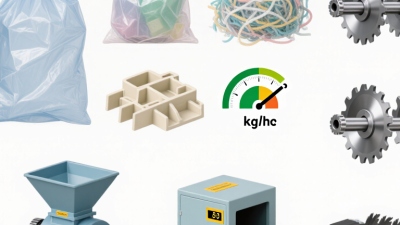
This chart compares representative processing-capacity benchmarks for common plastic waste streams. Rigid plastics, pipes, profiles, and pallets generally achieve higher throughput than films and mixed plastic waste because they are more consistent in shape, density, and feeding behavior. Actual performance depends on shredder configuration, screen size, material contamination, moisture, and feed conditions.
Evaluating plastic waste shredder manufacturers requires more than comparing motor power. The OECD’s Global Plastics Outlook reports 353 million tonnes of plastic waste generated in 2019, with only 9% recycled. That scale makes reliable equipment essential. Ask each manufacturer for independently witnessed throughput tests using your actual film, bottles, crates, or contaminated feedstock. A clean demonstration proves very little.
Inspect the rotor design, knife material, screen access, bearing protection, and overload response. Request measured energy use per tonne, not an estimated catalogue figure. Check whether the quoted capacity changes with moisture, bulk density, and particle size. It often does. The European Environment Agency also stresses better waste data and traceability across recycling systems. A serious supplier should provide test records, maintenance intervals, spare-part lead times, and operator training evidence.
Safety documentation deserves equal attention. Review risk assessments, guarding, emergency stops, electrical protection, and conformity documents against applicable market requirements. Ask for customer references handling similar waste, then speak with operators rather than only sales staff. Visit an operating installation if possible. Listen for abnormal vibration and inspect dust control around the discharge point. A polished factory tour can still conceal weak after-sales support. I would score service response, warranty exclusions, and documented performance separately, because my first scoring sheet was too focused on purchase price. The cheapest shredder may become the most expensive asset when knives, downtime, and labour are counted.
Top 10 Plastic Waste Shredder Manufacturers in 2026
The top ten plastic waste shredder manufacturers in 2026 should be judged beyond sales volume. Reliable rankings must examine cutting torque, throughput, energy use, safety systems, and service support. The OECD’s Global Plastics Outlook reports that 353 million tonnes of plastic waste were generated globally in 2019. Only 9% was recycled. This gap creates strong demand for dependable size-reduction equipment.
Industrial experience matters. A shredder handling rigid containers needs different rotor geometry from one processing film or agricultural plastic. Manufacturers with modular blades, automatic overload protection, and replaceable wear parts deserve closer attention. The European Plastics Industry Association has reported that Europe recycled more than 8.5 million tonnes of plastics in 2022. However, contamination and mixed materials still reduce efficiency. Machines must tolerate imperfect feedstock.
Energy performance also separates leading suppliers. The International Energy Agency continues to identify efficiency as a central industrial priority. Lower motor consumption can reduce operating costs across thousands of working hours. Yet published capacity figures can mislead. Laboratory tests rarely match wet, dirty, or heavily compacted waste. Buyers should request site references, noise data, maintenance records, and verified throughput tests. Some ranking criteria remain subjective. That is worth admitting. A cheaper machine may perform well initially, but weak after-sales support can become the most expensive flaw.
Comparative industry table based on commonly published equipment capabilities, application coverage, engineering configuration, and service availability. Company names and brand identifiers are intentionally omitted.
| Rank | Manufacturer Profile | Primary Market Region | Typical Shredder Configuration | Main Plastic Waste Applications | Indicative Throughput Range | Drive System | Typical Screen Range | Common Compliance Features |
|---|---|---|---|---|---|---|---|---|
| 1 | Profile A Global heavy-duty supplier |
Europe and North America | Single-shaft and twin-shaft industrial shredders | Film, woven sacks, rigid containers, pipes, and production scrap | 300–2,500 kg/h | Electric motor with high-torque gearbox | 20–100 mm | Emergency-stop circuits, overload protection, guarding, and interlocked access panels |
| 2 | Profile B Recycling-line specialist |
Europe and Asia-Pacific | Low-speed, high-torque single-shaft systems | Post-consumer mixed plastics, bulky items, crates, and automotive plastics | 250–2,000 kg/h | Hydraulic or electromechanical drive | 25–80 mm | Reverse-cycle control, ram-pressure monitoring, and thermal motor protection |
| 3 | Profile C High-volume processor |
North America and Latin America | Two-stage shredding and granulation lines | Large molded parts, agricultural film, pallets, and industrial plastic scrap | 500–3,500 kg/h | Direct electric drive with variable-frequency control | 30–120 mm | Automatic overload reversal, sound enclosure options, and dust-control interfaces |
| 4 | Profile D Municipal recycling focus |
Europe and the Middle East | Twin-shaft pre-shredders and secondary sizing units | Municipal plastic streams, packaging waste, containers, and bulky plastic items | 400–3,000 kg/h | Dual motor and gearbox arrangement | 40–150 mm | Safety-rated controls, torque limitation, accessible maintenance zones, and guarded shafts |
| 5 | Profile E Film and fiber specialist |
Asia-Pacific and Europe | Single-shaft shredders with hydraulic feeding ram | LDPE film, agricultural film, raffia, woven bags, and textile-plastic composites | 200–1,800 kg/h | Hydraulic ram with electric rotor drive | 20–60 mm | Variable-speed control, automatic rotor reversal, and hydraulic pressure protection |
| 6 | Profile F Compact-system producer |
Europe and Southeast Asia | Compact single-shaft units for decentralized processing | Packaging trim, injection-molding scrap, small containers, and rejected components | 100–900 kg/h | Electric motor with belt or gearbox transmission | 15–50 mm | Overcurrent protection, safety switches, removable screens, and compact acoustic options |
| 7 | Profile G Pipe and profile specialist |
Europe and North America | Long-bed single-shaft shredders with heavy-duty feed systems | HDPE and PVC pipes, profiles, sheets, tanks, and large hollow bodies | 300–2,200 kg/h | High-torque electric drive with hydraulic pusher | 30–100 mm | Oversized-feed protection, rotor torque monitoring, guarded hopper, and service access controls |
| 8 | Profile H Wash-line integration supplier |
Asia-Pacific, Europe, and Africa | Pre-shredders integrated with washing and separation systems | Post-consumer bottles, rigid packaging, films, and contaminated plastic waste | 300–2,500 kg/h | Electric drive with automated feed control | 25–80 mm | Wet-environment protection, automatic reversal, contamination-tolerant design, and interlocked covers |
| 9 | Profile I Industrial scrap specialist |
North America and Europe | Heavy-duty twin-shaft and four-shaft systems | Automotive bumpers, appliance plastics, pallets, electrical housings, and composite scrap | 500–4,000 kg/h | Multiple electric motors with torque-synchronized control | 40–120 mm | Automatic jam clearing, overload shutdown, lockout provisions, and reinforced chamber construction |
| 10 | Profile J Custom engineering supplier |
Global project markets | Application-specific single- or twin-shaft configurations | Mixed plastic waste, confidential products, production rejects, and difficult-to-process items | 150–2,000 kg/h | Configured electric, hydraulic, or hybrid drive | 20–100 mm | Customized guarding, PLC monitoring, emergency-stop systems, and site-specific risk controls |
In 2026, comparing the top ten plastic waste shredder manufacturers requires more than checking motor size. The practical question is simple: what material enters the machine, and what output must it produce? Single-shaft shredders suit bulky film, containers, and mixed production scrap. Twin-shaft systems provide strong torque for difficult, irregular loads. Granulators create finer flakes, but they usually need cleaner, pre-sized feed. A slow rotor reduces heat and noise. However, it may limit hourly throughput.
Capacity figures need careful reading. Some suppliers quote peak capacity under ideal conditions, not continuous plant performance. A realistic comparison includes feed density, moisture, contamination, screen size, and operating hours. Wet agricultural film can bridge inside a narrow hopper, while rigid crates may demand a reinforced cutting chamber. Applications also shape maintenance needs. Recycling centers often value automatic reverse functions and accessible blades. In-house factories may prioritize compact footprints, dust control, and stable particle size. Energy consumption per processed ton is another useful measure, though testing methods are not always consistent. I have found that a smaller machine can outperform a larger one when feeding is steady. Bigger is not automatically better.
Tips: Request test data using your actual waste. Ask for continuous capacity, not a maximum figure. Check blade replacement time, spare-parts access, guarding, and noise levels. Watch a full shift if possible. Short trials can hide jams. Also, document the final particle size, because “processed” does not always mean “ready for reuse.”
Choosing a plastic waste shredder manufacturer requires more than comparing prices. A top-ten list can guide research, but it should not decide your purchase. Start with your actual waste stream. Identify the plastic type, thickness, moisture level, contamination, and daily volume. A machine handling thin film may struggle with rigid containers or thick industrial parts.
Ask each manufacturer for verified capacity data, energy consumption, rotor design, knife material, and screen options. Request a sample test using your own plastic waste. Watch the output size, vibration, noise, and heat during operation. Small details matter. Measure twice.
Reliable manufacturers explain maintenance clearly. Check access to replacement knives, bearings, screens, and technical support. Ask how quickly service teams respond and whether training is included. Review safety documentation and documented compliance for your operating market. A confident sales promise is not enough.
Consider the complete operating cost, not only the purchase price. A cheaper shredder may consume more power or require frequent knife changes. That difference grows quickly in a busy recycling line. I would also question impressive capacity claims without test conditions. Feed speed, material density, and operator skill can change results.
Some specifications look precise, yet remain difficult to reproduce. Choose a manufacturer willing to discuss those limits openly. That honesty is often more valuable than a polished brochure.