Choosing a Domestic Refuse Crusher in 2026 requires more than comparing motor power and purchase prices. Household waste varies widely, from soft food packaging to rigid cans and small garden debris. A suitable machine should match your waste volume, available space, noise tolerance, and daily habits.
This guide examines practical features that influence long-term performance. These include crushing capacity, chamber size, energy consumption, corrosion resistance, cleaning access, safety interlocks, and replacement-part availability. A compact unit may fit neatly beneath a workbench, while a larger model could handle heavier household loads. However, bigger does not always mean better. An oversized crusher may consume more energy and remain underused.
Real-world experience also matters. Listen for unusual vibration, inspect the discharge area, and check whether the controls remain clear after repeated use. Reliable manufacturers should provide understandable specifications, maintenance instructions, warranty terms, and responsive technical support. Product claims deserve careful verification. Marketing language can sound impressive, but measurable data is more useful.
Safety cannot be treated as an afterthought. Users should follow the manufacturer’s instructions and avoid unsuitable materials, liquids, batteries, pressurized containers, and hazardous waste. Local waste-handling requirements may also differ. Check them before installation.
Small details matter.
This buying guide compares practical options for different homes and budgets. It also recognizes an uncomfortable truth: no crusher eliminates waste or replaces responsible sorting. The best choice reduces volume safely, supports cleaner storage, and remains dependable after the initial excitement fades.
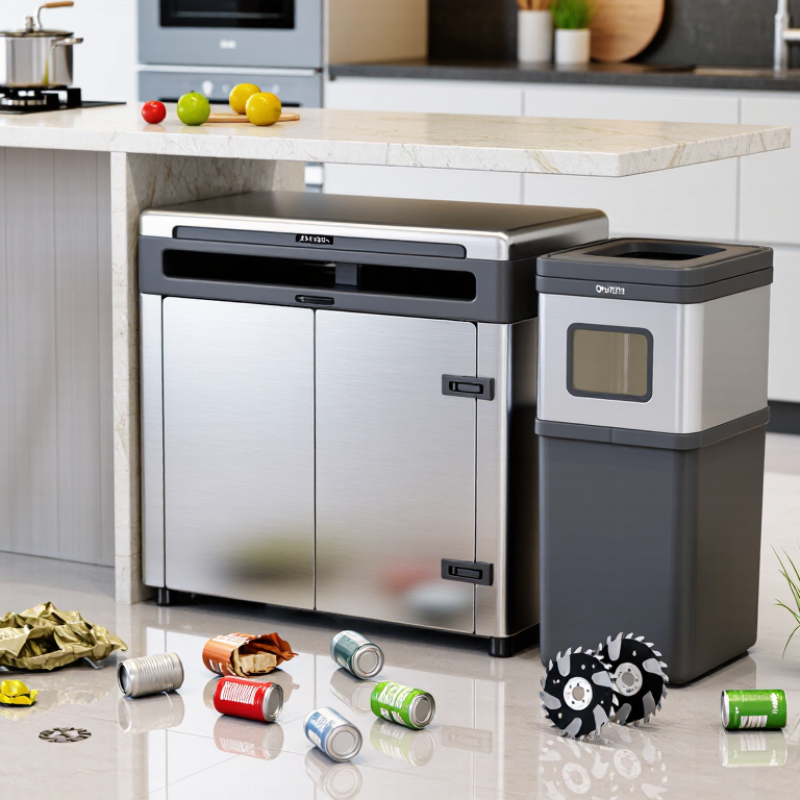
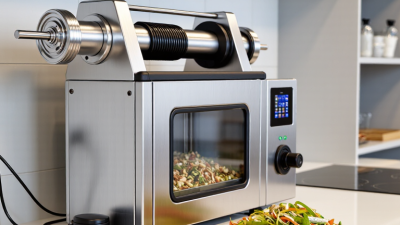
A domestic refuse crusher is a compact machine that reduces household waste into smaller, easier-to-handle pieces. It is designed for controlled waste processing at home, not for hazardous materials or oversized objects. In practical use, it can handle suitable food-free refuse, cardboard, soft packaging, and other approved household materials.
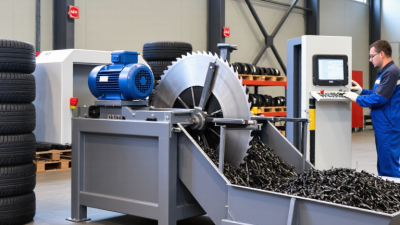
The process is straightforward. Waste enters a covered hopper, where rotating cutters or crushing plates apply pressure and shear force. A geared motor drives this mechanism at a controlled speed. Smaller pieces pass through an internal screen, while larger pieces remain inside for further crushing. Many units include overload protection, reverse rotation, and an emergency stop switch. These features matter when a hard object jams the chamber.
Check the working capacity carefully. A machine that looks powerful may struggle with damp or tightly packed waste. The motor should run steadily, without burning smells, sharp vibration, or unusual noise. I would also inspect the access panel and cleaning points before buying. They are easy to ignore. That can become an unpleasant maintenance problem later. Keep hands away from the hopper, disconnect power before cleaning, and follow local waste-handling requirements. Performance also depends on waste type, moisture, and how evenly the material is loaded.
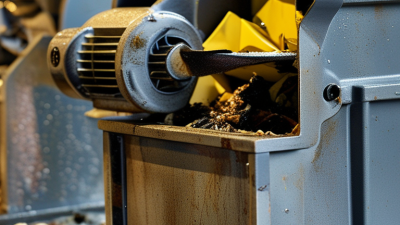
A domestic refuse crusher is a compact machine designed to reduce the size of selected household waste before disposal, storage, or recycling. It typically uses rotating cutters, blades, or compression to break bulky materials into smaller pieces.
The chart shows the approximate global composition of municipal solid waste by mass. Food and green waste form the largest share, while paper, cardboard, plastics, glass, and metals are common dry materials that may require different handling. Always check the machine manual before processing wet waste, batteries, aerosols, chemicals, electronics, or other hazardous materials.
Data source: World Bank, What a Waste 2.0. Global municipal solid waste composition averages; local household waste composition may vary.
In 2026, domestic refuse crushers should be selected by waste type, not appearance. A wet-waste grinder uses rotating knives or hammers for food scraps and soft organic material. A dry-waste shredder handles cardboard, thin plastic, and light packaging. Dual-shaft machines provide stronger torque for mixed household waste, but they usually need more space and electrical capacity. According to the World Bank’s What a Waste 2.0 report, global municipal waste reached about 2.01 billion tonnes in 2016 and may reach 3.40 billion tonnes by 2050. Small equipment still matters.
Key features deserve careful inspection. Look for reversible overload protection, hardened cutting edges, sealed bearings, and an easily removable chamber. Torque is more important than advertised speed. Low-speed cutting often reduces dust and noise. Noise matters. A practical unit should also provide clear access for cleaning, because wet residue can harden around the cutters. UNEP’s Global Waste Management Outlook 2024 estimates that municipal waste could rise from 2.1 billion tonnes in 2023 to 3.8 billion tonnes by 2050. This supports demand for compact processing equipment, but household users should not assume higher capacity means better performance. Fit matters. Measure the inlet, footprint, power supply, and daily waste volume before buying. A crusher is not a magic recycling machine. I would also question optimistic throughput figures, since moisture, plastic film, and irregular loading can reduce real output.
| Crusher Type | Typical Domestic Applications | Suitable Waste Materials | Typical Capacity | Typical Feed Size | Typical Output Size | Main Drive and Power Range | Key Advantages | Important Limitations | Recommended Safety Features |
|---|---|---|---|---|---|---|---|---|---|
| Single-Shaft Shredder Crusher | Small recycling rooms, apartment waste stations, and pre-processing areas | Mixed household waste, packaging, plastic containers, textiles, and light wood | 100–1,000 kg/h | Up to approximately 300–600 mm, depending on hopper design | 20–80 mm with an interchangeable screen | Low-speed hydraulic or electric drive; commonly 5.5–45 kW | Adjustable size reduction, good control of irregular feed, and relatively low noise | Screens may clog when processing wet, sticky, or string-like materials | Emergency stop, reverse function, overload protection, guarded hopper, and screen interlock |
| Twin-Shaft Shear Crusher | Community collection points, bulky domestic refuse, and general waste pre-treatment | Furniture components, household plastics, cardboard, wood pieces, and bagged refuse | 300–3,000 kg/h | Up to approximately 400–800 mm, subject to shaft spacing | 50–150 mm; finer sizing generally needs secondary processing | Two low-speed counter-rotating shafts; commonly 11–75 kW total | High torque, strong resistance to occasional bulky items, and effective bag opening | Output is less uniform than screened shredding; long fibrous items may wrap around shafts | Torque limiter, automatic reverse, shaft guards, lockable access doors, and overload monitoring |
| Hammer Crusher | Dry refuse processing, small transfer stations, and preparation of brittle materials | Dry wood, brittle plastic, glass, mineral fragments, and selected construction refuse | 200–2,000 kg/h | Usually up to approximately 100–300 mm | 10–50 mm, determined by grate or screen openings | High-speed rotor with swinging or fixed hammers; commonly 7.5–55 kW | Effective impact crushing and relatively consistent sizing for dry, brittle feed | Higher noise and dust; unsuitable for large quantities of wet, elastic, or highly fibrous waste | Full enclosure, dust extraction connection, vibration monitoring, hearing protection, and magnetic metal removal |
| Roll Crusher | Controlled crushing of dry, uniform materials in compact processing lines | Dry glass, brittle plastics, ash-like materials, and selected mineral-based refuse | 200–1,500 kg/h | Typically up to approximately 100–250 mm | 10–60 mm, depending on roll gap | One or two counter-rotating rolls; commonly 5.5–37 kW | Moderate noise, simple size adjustment, and predictable compression crushing | Not suitable for bulky, tangled, elastic, or very wet mixed household waste | Adjustable relief system, nip-point guarding, emergency stop, and feed-rate control |
| Vertical Organic Waste Crusher | Food-waste preparation, canteens, residential communities, and composting pre-treatment | Food scraps, vegetable waste, soft organic refuse, and limited biodegradable packaging | 50–500 kg/h | Small loose feed; commonly below 100–200 mm | 10–40 mm, depending on cutter and screen design | Vertical rotor or cutter assembly; commonly 3–22 kW | Compact footprint and improved surface area for subsequent biological treatment | Requires source separation; stones, metal, and excessive moisture can damage or obstruct the machine | Washable contact surfaces, corrosion-resistant parts, interlocked access cover, and sanitation-friendly drainage |
| Compact Kitchen Food-Waste Crusher | Residential kitchens and small food-service preparation areas | Soft food scraps, small bones where permitted, vegetable waste, and fruit waste | 10–100 kg/h | Generally below 50–100 mm | Usually 3–15 mm slurry or chopped organic material | Small electric motor; commonly 0.5–3 kW | Small footprint, simple operation, and reduced volume of organic refuse | Not designed for plastic, metal, glass, excessive grease, or large hard bones; drainage regulations may apply | Splash guard, resettable overload protector, grounded electrical connection, and lockout before cleaning |
| Wet Waste Crusher and Dewatering Unit | Mixed food-waste collection points and small organic-waste handling systems | Wet food waste, soft organic refuse, and separated biodegradable materials | 100–1,000 kg/h | Usually below 100–200 mm after removal of oversized objects | 10–40 mm with partial moisture reduction | Low-speed cutter, auger, or perforated press; commonly 4–30 kW | Combines size reduction and moisture control, lowering transport volume | Needs regular cleaning; unsuitable for unsegregated waste containing metal, glass, or abrasive contaminants | Corrosion-resistant construction, sealed bearings, washdown design, emergency stop, and removable screens |
| Can and Light-Metal Crusher | Household recycling rooms, retail collection areas, and community recycling stations | Aluminum cans, thin steel cans, and other approved light-gauge metal containers | 100–800 kg/h | Containers commonly up to 300–500 mm in length | Flattened or compacted form rather than a fixed granular size | Hydraulic, pneumatic, or mechanical compression; commonly 1.5–15 kW | Reduces storage and transport volume and supports easier recycling logistics | Does not replace metal sorting; sealed containers, thick steel, and non-metallic objects can create hazards | Two-hand controls or guarded cycle controls, pressure relief valve, ram shielding, and safety interlock |
Choosing a household refuse crusher begins with the waste you actually produce. Kitchen scraps, cardboard, cans, and small garden trimmings behave differently inside a crushing chamber. Do not buy by motor power alone. Measure your weekly waste volume, then compare chamber size, feed opening, and cycle time. A compact machine may suit an apartment, while a larger household needs stronger continuous handling.
Safety deserves careful attention. Select a model with overload protection, an emergency stop, a secure lid, and easy access for cleaning. Avoid crushing batteries, aerosol containers, chemicals, medical sharps, or sealed objects. These items require separate collection. A crusher is not a disposal permit. Check local waste rules before changing your disposal routine.
Noise and dust can affect daily comfort. Look for sealed pathways, vibration control, and washable components. Energy use also matters when the machine runs frequently. I once underestimated cleaning time; residue gathered around corners faster than expected. That small detail changed my preference toward simpler chambers and removable parts. Reverse operation helps clear jams, but it does not replace careful loading. Wet waste may need draining first, because excess moisture can cause odors, clumping, and difficult maintenance. Test realistic materials before deciding. Marketing numbers rarely show the whole household experience.
2026 Best Domestic Refuse Crusher Buying Guide
Installation begins with the floor, not the control panel. A domestic refuse crusher needs a level, load-bearing surface and clear service access. Check the equipment manual, electrical rating, drainage route, and emergency-stop position before delivery. OSHA 29 CFR 1910.212 requires guarding around dangerous machine points. That protection must remain fitted after installation.
During operation, separate metal, glass, batteries, and pressurized containers before loading. Never reach into the chamber, even when the motor sounds quiet. Use a stop-control and lockout procedure before removing jams or cleaning blades. OSHA’s Control of Hazardous Energy standard, 29 CFR 1910.147, supports this practice. Operators should wear eye protection, cut-resistant gloves, hearing protection, and non-slip footwear. Keep hands dry.
The U.S. Environmental Protection Agency reported 292.4 million tons of municipal solid waste generated in 2018. That volume shows why reliable size reduction matters, but throughput should never outrank safe handling. The operator should watch vibration, unusual noise, heat, and repeated overload trips. Small warning signs matter. A maintenance log should record inspections, blade wear, electrical faults, and cleaning dates. The U.S. Bureau of Labor Statistics recorded 5,283 fatal work injuries in 2023, reminding buyers that safety depends on daily discipline, not equipment claims. A clean checklist helps. It is not enough.
2026 Best Domestic Refuse Crusher Buying Guide
A domestic refuse crusher should match your household’s waste volume, not your hopes. In my experience, overloaded machines consume more power and develop blunt cutting edges sooner. Check the chamber size, motor protection, noise rating, and access for cleaning. A washable chamber matters when food residue dries overnight. It saves unpleasant work later.
Maintenance costs are usually modest, but neglect can become expensive. Inspect blades, seals, and fasteners monthly. Remove trapped material with the power disconnected. Never process batteries, chemicals, aerosol containers, glass, or sharp metal unless the manual clearly permits them. My early cost estimate was too optimistic; replacement seals and professional servicing can exceed expectations. Keep a small annual budget for wear parts, cleaning tools, and electrical checks. A qualified technician should handle unusual vibration or burning smells.
Tips: Measure your available space before buying. Leave room around ventilation openings. Record operating noise during the first week. This creates a useful comparison later. Choose a model with repairable parts and clear waste-sorting guidance. Crushing waste does not remove its environmental impact. It can reduce volume and collection trips, but it still uses electricity and may complicate recycling. Separate recyclable materials before crushing, and follow local disposal rules for restricted waste. A smaller machine may be the greener choice when your household produces little refuse.