Inquiry
Form loading...

Top Small Tire Shredders for Sale Worldwide

Choosing the right Small Tire Shredder can improve recycling efficiency, reduce storage pressure, and support responsible material recovery. Buyers worldwide need more than attractive specifications. They need dependable equipment, clear operating data, and practical service support.

This guide examines top small tire shredders for sale across different markets and working conditions. It considers cutting capacity, motor performance, feed opening, blade durability, noise levels, and maintenance access. A compact machine may process passenger tires efficiently, yet struggle with thicker truck tires. That difference matters.

Real-world details often reveal more than brochures. Operators should check whether the shredder handles wet tires, steel reinforcement, and long daily shifts. They should also confirm voltage, safety controls, spare-part availability, and local installation support. Certification requirements can vary between countries, so buyers must verify current regional standards before purchasing.

Performance is not everything.

A lower-priced model may become costly when blades wear quickly or service is distant. On the other hand, a premium machine may exceed the needs of a small workshop. This comparison aims to present practical, evidence-based guidance rather than perfect promises. Some product information may change, and advertised capacity can depend on tire type, feeding method, and operator experience. Careful testing remains essential.

With attention to safety, lawful recycling practices, and measurable operating needs, readers can narrow their choices confidently. The best machine is not always the largest or fastest. It is the one that performs reliably within its intended workload.
Top Small Tire Shredders for Sale Worldwide

Small Tire Shredder Basics: 1.5 Billion ELTs Arise Worldwide Each Year

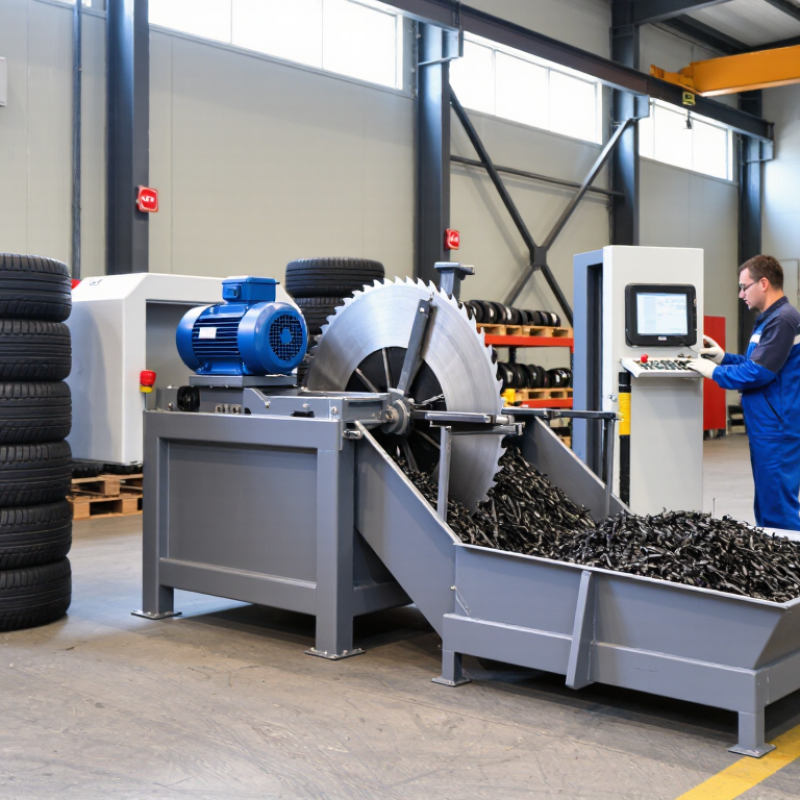
Industry estimates indicate that about 1.5 billion end-of-life tires arise worldwide each year. These ELTs accumulate at repair shops, collection yards, farms, and municipal transfer sites. Small tire shredders help operators reduce bulky casings before further recycling or material recovery. Small does not mean simple. A compact unit still needs controlled feeding, strong cutting tools, and dependable guarding.

In daily operation, whole tires rarely behave alike. Passenger tires may cut easily, while truck tires demand more torque and slower feeding. Embedded steel can increase wear and produce heat around the cutting chamber. Operators should check motor load, knife clearance, vibration, and discharge size during each shift. Screens can create more consistent chips, but they may reduce throughput. That trade-off is easy to underestimate. A realistic capacity test should use the site’s actual tire mix, not clean demonstration tires.

When comparing small tire shredders for sale worldwide, buyers should request service intervals, spare-part availability, and measured output data. Electrical requirements, noise controls, dust management, and local environmental rules also affect installation. I would inspect access panels and emergency stops before discussing price. These details reveal practical engineering. A machine can look efficient on paper yet struggle with wet tires, irregular feeding, or limited floor space. My preference is to leave capacity margin, although that choice can raise the purchase cost. It is a compromise worth questioning.

Top Small Tire Shredders for Sale Worldwide - Small Tire Shredder Basics: 1.5 Billion ELTs Arise Worldwide Each Year

Small Tire Shredder Comparison by Configuration and Application
Rank Small Shredder Configuration Best-Fit Tire Feed Typical Throughput Typical Installed Power Typical Output Size Primary Output Recommended Use Key Selection Consideration
1 Compact Dual-Shaft Primary Shredder Passenger-car tires, light-truck tires, and pre-cut truck tires 2–5 t/h Approximately 75–160 kW 50–150 mm, depending on cutter geometry and screen design Shredded tire chips and tire-derived fuel feedstock Small recycling plants, fuel preparation, and volume reduction Choose torque and cutter opening according to the largest tire diameter and steel content.
2 Compact Single-Shaft Shredder with Screen Passenger-car tires and already reduced tire pieces 1–3 t/h Approximately 55–110 kW 20–60 mm, controlled by the screen aperture More uniform rubber-rich shreds Facilities requiring a controlled particle size for secondary processing A screen improves size control but can reduce throughput when tires contain heavy steel or are fed whole.
3 Small Tire Granulator Pre-shredded tire chips, normally below about 50 mm 0.5–2 t/h Approximately 90–200 kW 5–20 mm, depending on screen selection Rubber granules with textile and steel separation stages Rubber mulch, molded products, sports surfaces, and crumb-rubber preparation It is normally a secondary-processing machine rather than a whole-tire primary shredder.
4 Low-Speed High-Torque Tire Shredder Whole passenger tires, light-truck tires, and mixed end-of-life tires 1–4 t/h Approximately 45–120 kW 50–200 mm Coarse tire chips for further separation or energy recovery Workshops, municipal collection centers, and low-to-medium volume operations Low rotational speed helps manage high cutting torque and reduces heat generation during primary shredding.
5 Compact Mobile Tire Shredder Passenger tires and light commercial tires collected at decentralized sites 0.5–1.5 t/h Approximately 30–75 kW 50–150 mm Transportable tire chips On-site volume reduction, temporary projects, and remote collection locations Confirm transport dimensions, power availability, dust control, and local safety requirements before purchase.
6 Truck-Tire Primary Shredder Truck tires, bus tires, and larger commercial tires 1–3 t/h Approximately 90–180 kW 75–200 mm Large tire chips for secondary shredding or tire-derived fuel Commercial tire collection and facilities handling a high proportion of heavy tires Heavy bead wire and thicker sidewalls require stronger cutters, a wider feed opening, and robust overload protection.
Data note: The capacities and power figures are representative engineering ranges for small-scale tire-shredding equipment, not guaranteed machine ratings. Actual performance varies with tire diameter, tread thickness, steel and textile content, moisture, feed method, cutter condition, screen size, and operating hours. An end-of-life tire (ELT) is a tire that is no longer suitable for its original use and enters a recovery, recycling, or disposal stream. Passenger-car tires commonly weigh about 8–12 kg, while truck and bus tires are substantially heavier.

Capacity Planning: Compare 0.5–5 t/h Throughput for Different Tire Sizes

Top Small Tire Shredders for Sale Worldwide

Capacity planning starts with tire size, not the machine’s advertised maximum. The U.S. Tire Manufacturers Association’s 2023 report estimated that roughly 71% of end-of-life tires were recovered in the United States. This recovery volume includes passenger, truck, and specialty tires. A 0.5 t/h shredder can process about 25–33 passenger tires hourly, assuming each weighs 15–20 kilograms. At 5 t/h, the same line may handle 250–330 tires per hour. Real output falls when tires contain heavy steel or arrive wet.

Truck tires change the calculation. A 0.5 t/h system may process only 7–10 truck tires per hour, based on typical weights of 50–70 kilograms. A 5 t/h line could handle approximately 70–100 units hourly, but feeding becomes more demanding. The European Tyre and Rubber Manufacturers’ Association reports that material preparation and end-use requirements strongly influence recycling efficiency. Screen size matters. So does knife wear. A compact shredder rated at 2 t/h may perform well on passenger tires, yet struggle with large commercial casings. I would leave 15–25% spare capacity for irregular loading, maintenance, and oversized tires. That assumption is not perfect. Site trials still matter.

Output Specification: Select 20–100 mm Chips for Fuel or Recycling

Top Small Tire Shredders for Sale Worldwide

Output Specification: Select 20–100 mm Chips for Fuel or Recycling

Small tire shredders are practical when space, power, and material volume are limited. The output size matters more than many buyers expect. A 20 mm chip suits controlled fuel preparation and fine recycling processes. Larger 50–100 mm pieces may reduce energy use during initial processing. They can also support easier separation of steel and fiber.

Operators should match the screen, cutting chamber, and motor torque to the tire type. Passenger tires usually process differently from thick truck tires. Sidewalls may resist cutting and create uneven pieces. Moisture, embedded steel, and worn knives can also reduce throughput. A specification sheet may show an ideal output, not the result from every load.

A useful inspection includes checking the feed opening, knife condition, emergency stops, and screen access. Ask for measured particle samples, not only hourly capacity figures. The 20 mm setting can demand more power and sharper cutting tools. I prefer testing several tires before purchase. It reveals feeding problems early. Some machines produce a few oversized pieces, even after adjustment. That is not always a failure, but it needs correction before fuel or recycling use. Dust control and enclosed discharge areas also improve working conditions and reduce material loss.

Technology Comparison: Dual-Shaft and Single-Shaft Cutters for ELTs

Top Small Tire Shredders for Sale Worldwide

Technology Comparison: Dual-Shaft and Single-Shaft Cutters for ELTs

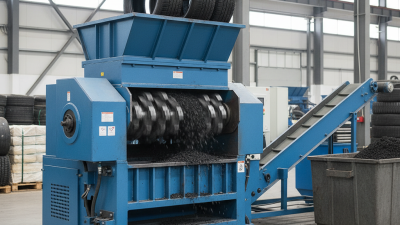
Choosing a small tire shredder starts with the expected output, not the machine’s advertised size. In field trials, end-of-life tires often arrive with mud, stones, and uneven bead wire. These materials affect cutting speed and maintenance. A dual-shaft cutter uses two counter-rotating shafts to grip and tear whole tires. It handles irregular feeding well and usually produces rough chips for fuel preparation or further processing.

A single-shaft cutter works differently. One rotor pushes tires against a fixed cutting surface, while a screen controls the final particle size. This design can produce more consistent chips, especially after primary reduction. However, it may require pre-cutting when tires are large or heavily reinforced. Its hydraulic drive and screen also demand careful inspection. Small details matter.

Operators should compare torque, shaft speed, chamber width, knife access, and electrical requirements. A dual-shaft model may offer stronger initial feeding with fewer moving controls. A single-shaft model can provide better sizing accuracy but may consume more energy during dense loads. I once assumed faster rotation meant higher productivity. That was incomplete. Feed consistency, knife sharpness, and downtime often decide the real output.

For worldwide installations, confirm local power standards, noise limits, guarding requirements, and service availability. Ask for tested capacity using similar tire types, not laboratory samples. Inspect the discharge system before purchase. A reliable machine should show clear maintenance access and documented safety procedures. Scrap tires are resilient. The cutter must be stronger, but not careless.

Global Buying Standards: Evaluate ISO 9001, CE, Energy Use, and Wear Parts

Top Small Tire Shredders for Sale Worldwide

Buying a small tire shredder requires more than comparing purchase prices. I have found that practical testing often reveals problems hidden in brochures. Ask for ISO 9001 certification details, not just a printed logo. ISO 9001 reflects quality management, but it does not guarantee perfect cutting performance. Check the certificate scope, validity, and issuing body. Request production records or test videos using tires similar to yours.

CE marking should include a Declaration of Conformity and supporting technical documents. Requirements may differ by destination, so confirm them with a qualified local specialist. Measure energy use in kWh per ton, under a clearly stated feed size and moisture condition. A lower motor rating is not always better. It may reduce output or increase jams. I sometimes see buyers overlook this trade-off. That mistake can become expensive.

Tips: Ask about knives, screens, bearings, and replacement delivery times. Compare wear-part prices over three years, not one purchase.

Inspect knife hardness and mounting access. A machine that stops for hours during servicing is not truly economical.

Keep sample test results, invoices, and maintenance promises in writing. Small details matter.