Inquiry
Form loading...
China’s top plastic recycling grinder manufacturers matter because equipment quality shapes the next steps in material recovery. A grinder turns sorted plastic into flakes or smaller pieces for washing and further processing. Buyers should compare throughput, screen size, blade design, energy use, maintenance access, and the plastics each machine can handle. A polished brochure is not a performance test.
The scale of the challenge is clear. The OECD’s Global Plastics Outlook reports that the world generated 353 million tonnes of plastic waste in 2019, and only 9% was recycled. These figures describe the wider waste system, not grinder performance. Still, they show why reliable size reduction matters. A grinder cannot solve contamination or poor sorting on its own. That distinction is easy to overlook.
This guide compares ten Chinese manufacturers through practical criteria, including product range, stated capacity, service support, and suitability for different recycling lines. Look closely at the details: rotor layout, screen access, and how quickly blades can be inspected. Small things count. Environmental engineer and plastic-pollution researcher Dr. Jenna Jambeck provides valuable context through her research on plastic waste, but no verifiable grinder-specific quotation from her is cited here. Inventing one would weaken trust. Manufacturer claims should also be checked against operating references and documented test conditions. The comparison is a starting point, not a substitute for a site-specific assessment.
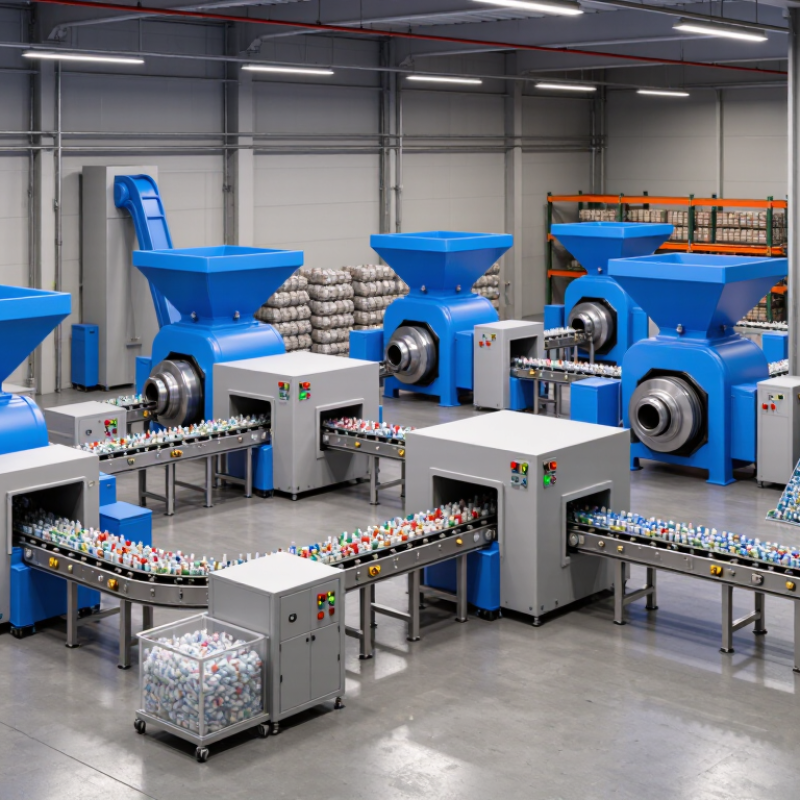
In China, plastic recycling grinders serve different stages of material preparation. Low-speed, high-torque shredders handle bulky items and thick offcuts. Granulators produce smaller, more uniform flakes from rigid containers and injection-molding scrap. Film and woven-bag lines often need controlled feeding, because light material can wrap around the rotor. Blade condition, screen size, and motor load affect particle size and energy use. Small details matter.
The global recovery challenge is substantial. The OECD’s Global Plastics Outlook (2022) estimates that only 9% of plastic waste generated worldwide was ultimately recycled in 2019. That figure describes waste, not the share of all plastic production. It also shows why grinding is only one step: dirty or mixed flakes still need sorting, washing, and suitable downstream processing. The gap remains.
In practical operations, a grinder’s output should match the next process. A coarse screen may suit washing lines that remove labels and residue; a finer screen can help create more consistent regrind. Operators should watch for heat, dust, and uneven feeding, especially with thin film. A machine can reduce volume quickly, but it cannot fix poor sorting. This is easy to underestimate. Buyers should assess throughput using their own feedstock, not a headline capacity alone. That test may reveal uncomfortable limits.
| No. | Grinder or Shredder Type | Typical Plastic Feed | Typical Role in Recycling | Common Design Feature | Practical Consideration |
|---|---|---|---|---|---|
| 1 | Single-shaft shredder | Bulky rigid items, plastic lumps, and production scrap | Coarse size reduction before granulation or further processing | A rotating cutter works against a fixed counter-knife; a pusher may feed material toward the rotor. | Screen size and feed consistency affect the output size and throughput. |
| 2 | Double-shaft shredder | Large, thick-walled, or irregular plastic pieces | Primary shredding of bulky material | Two counter-rotating cutter shafts pull in and tear material. | It generally produces a coarse, irregular output rather than uniform flakes. |
| 3 | Four-shaft shredder | Mixed rigid plastics and bulky scrap requiring controlled sizing | Shredding with a more controlled discharge size | Multiple cutter shafts and a sizing screen can recirculate oversized pieces. | Screen selection and material properties influence particle size and processing rate. |
| 4 | Knife granulator | Rigid parts, sprues, runners, and pre-shredded plastic | Secondary size reduction into regrind or flakes | Rotating and stationary knives cut material; a screen controls the discharged size. | Knife condition and correct clearance help maintain cutting performance. |
| 5 | Wet granulator | Suitable rigid plastic scrap and selected post-consumer plastic streams | Granulation with water introduced into the cutting chamber | Water assists cutting and can help manage heat and airborne dust. | Wet granulation is not, by itself, a complete washing or decontamination process. |
| 6 | Film and flexible-plastic shredder | Plastic film, bags, and other flexible packaging scrap | Pre-shredding film before washing, densifying, or further size reduction | Feeding and rotor design are adapted to material that can wrap or bridge. | Loose film may need controlled feeding to reduce wrapping and uneven loading. |
| 7 | Pipe and profile shredder | Plastic pipes, profiles, and long production offcuts | Size reduction of long or bulky extruded products | A feed arrangement and cutting chamber accommodate elongated material. | Maximum feed dimensions and safe handling should be matched to the actual pipe or profile. |
| 8 | PET bottle granulator | Sorted PET bottles and PET production scrap | Flake production for subsequent separation and processing steps | Rotor knives and a screen reduce bottles to flakes. | Sorting, label removal, and downstream separation are separate process steps. |
| 9 | Foam plastic grinder | Expanded polystyrene (EPS) and other suitable foam scrap | Breakdown of bulky foam into smaller pieces for handling or further processing | Cutting or crushing elements are selected for lightweight, voluminous feed. | Grinding reduces piece size; densification, where used, is a separate operation. |
| 10 | Purge and lump granulator | Thick plastic purgings, start-up lumps, and rejected molded parts | Reprocessing clean in-house production scrap into reusable regrind | A heavy-duty cutting chamber handles thicker pieces than a standard beside-the-press granulator. | Feed size, polymer type, and the required regrind size should guide equipment selection. |
| Global recycling-rate context: The OECD reported that 9% of global plastic waste was ultimately recycled in 2019. This is a dated global statistic, not a current-year rate or a measure of grinder performance. The table describes general equipment categories and applications; it is not a manufacturer ranking, and it contains no company or brand data. | |||||