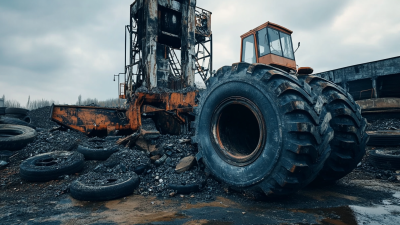
Tire Shredding has become an important step in managing end-of-life tires and preparing rubber for further processing. For buyers comparing China’s top tire shredding machine suppliers, the key question is not simply which machine looks largest. It is whether the equipment can handle the required tire types, output size, and daily throughput consistently.
Industry data shows why dependable processing matters. The U.S. Tire Manufacturers Association’s 2023 scrap tire management report estimated that the United States generated about 256 million scrap tires in 2021. It also reported that roughly 79% were directed to beneficial uses. These figures describe the U.S. market, not China, but they illustrate the scale of the recycling challenge. Shredders help turn bulky tires into manageable pieces for downstream applications.
Supplier claims still need careful checking. A detailed specification sheet is useful, but it cannot replace a materials test, a clear maintenance plan, or verifiable customer references. Ask about blade life, motor protection, spare-parts availability, and the actual output produced from your tire mix. A neat factory video may not show stoppages or difficult feed conditions. That matters. This guide examines how to assess Chinese suppliers, compare machine configurations, and identify evidence behind performance claims. No single model suits every plant, and even a well-built machine can disappoint when installation, operator training, or after-sales support is overlooked.
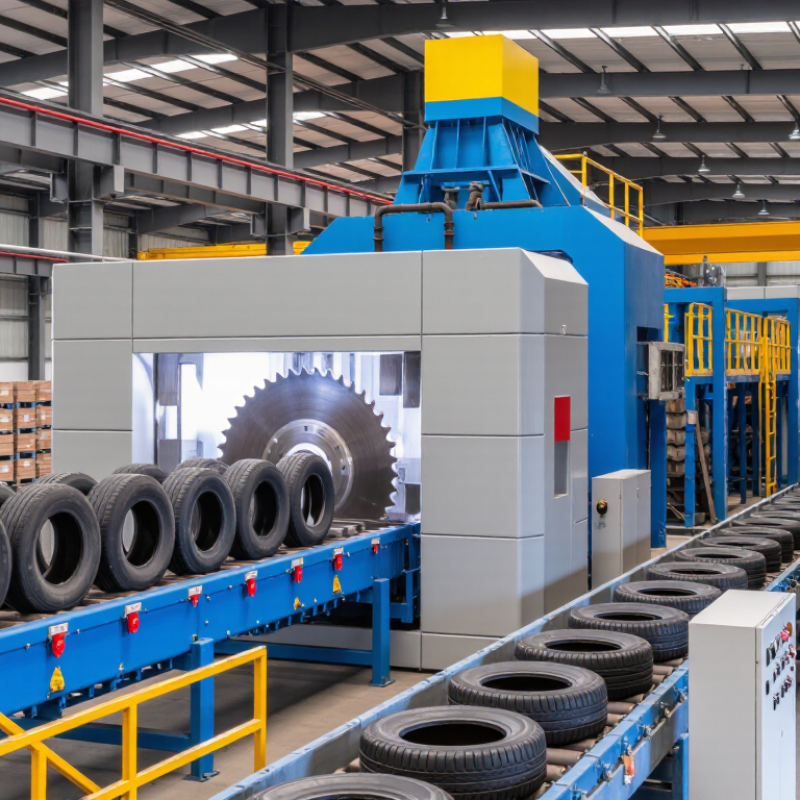
A tire shredding machine reduces whole tires into smaller, manageable pieces. It usually uses slow-speed shafts, sharp cutters, and strong electric or hydraulic power. The machine tears rubber, steel wire, and textile materials apart through controlled shearing. Output size depends on cutter design, screen openings, and operating speed. Some systems produce rough shreds for fuel or construction applications. Other systems create smaller chips for further rubber processing.
In practical work, tire condition matters. Wet, frozen, or heavily contaminated tires may reduce feeding efficiency. Operators should inspect cutters, check hydraulic pressure, and remove trapped wire safely. A reliable supplier should explain capacity using real test data, not only attractive showroom figures. Ask about motor power, maintenance access, spare parts, noise levels, and dust-control options. Certification and technical documentation also deserve careful review. A large machine is not always the best choice.
Tips:
Test sample tires before ordering. Confirm the expected output size. Check whether the machine handles passenger and truck tires. Keep a written maintenance schedule. Small oversights become costly. Suppliers should provide clear installation guidance and operator training. Still, every site is different, and promised capacity may change with tire composition, feeding methods, and working hours. That point deserves honest discussion.
China Top Tire Shredding Machine Suppliers?
How Tire Shredding Machines Process End-of-Life Tires
End-of-life tires are difficult to handle because rubber, steel, and textile fibers are tightly bonded. The European Tyre and Rubber Manufacturers’ Association reports about 3.6 million tonnes of used tires arise annually in Europe. Globally, industry assessments often estimate more than one billion waste tires each year. The numbers vary by method, but the volume is undeniable.
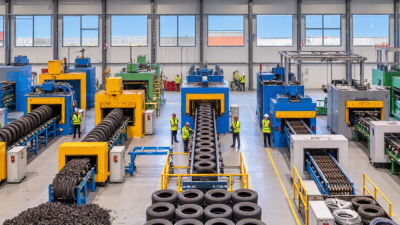
A tire shredding line usually begins with debeading or whole-tire cutting. A primary shredder then tears tires into rough chips, often 50–150 millimeters wide. Steel wires remain visible. Magnetic separators pull out most steel during a later pass. Granulators reduce the rubber into smaller pieces, while screens control particle size. Air separation can remove textile fibers. The final output may become rubber mulch, tire-derived fuel, or fine rubber granules.
The process is mechanical, dusty, and sometimes noisy. Real operating conditions are less perfect than supplier brochures suggest. Moisture, worn knives, and uneven feeding can reduce throughput. In my experience, maintenance planning matters as much as motor power.
Tips: Ask suppliers for tested capacity using your actual tire types. Confirm steel recovery rates, noise controls, dust collection, spare-part access, and energy consumption. Request a sample trial before purchase. A machine that performs well on passenger tires may struggle with truck tires. Judge the whole line, not only the shredder.
A leading supplier is defined by more than advertised throughput. Buyers should examine the complete process: feeding, primary shredding, screening, and maintenance access. Ask for verified output sizes and measured capacity using comparable tire types. A machine processing passenger tires may perform differently with truck tires or steel-rich material.
Realistic trials matter. Request operating data, wear-part life, energy use, and dust-control details. The U.S. Environmental Protection Agency identifies tire-derived materials as a significant reuse pathway, but consistent sizing is essential for downstream applications. A supplier should explain how its equipment supports that consistency, rather than promise one ideal result.
Reliability is visible in practical details: guarded access doors, clear emergency stops, documented service intervals, and spare parts with stated delivery times. Ask to inspect a running installation or review a recorded test with feedstock and output measurements.
The European Tyre and Rubber Manufacturers’ Association reported that Europe generated about 3.9 million tonnes of end-of-life tires in 2021, with roughly 95% collected and treated. This regional benchmark illustrates the scale and importance of dependable processing; it is not a China-specific market estimate.
A strong supplier will distinguish proven figures from estimates, provide installation and operator training, and discuss limitations openly. Some promises still sound too neat. Check them against your own material, site conditions, and maintenance capacity.
Chinese tire-shredding machine suppliers typically offer complete lines, from wire removal and primary shredding to screening and magnetic separation. Some focus on compact systems for smaller processors; others provide higher-throughput plants with conveyors, dust-control equipment, and adjustable screens. Buyers should compare rated capacity with the actual tire mix. Passenger tires and steel-belted truck tires do not process identically. Ask for material samples, power requirements, blade specifications, and maintenance intervals. Details matter.
Market demand is supported by substantial end-of-life tire volumes. The European Tyre and Rubber Manufacturers’ Association reported that Europe generated about 3.9 million tonnes of end-of-life tires in 2021, with roughly 95% collected and treated. The U.S. Environmental Protection Agency’s 2019 scrap-tire report estimated about 290 million tires generated annually in the United States. These figures describe different regions and reporting methods, so they should not be compared directly. For Chinese suppliers, useful evidence includes documented test runs, output-size measurements, and references from operating plants. A polished brochure is not enough. One weakness in many equipment comparisons is limited disclosure of sustained throughput under real operating conditions; request performance data for a full shift, not just a brief demonstration.
Choosing a tire shredding machine supplier requires more than comparing prices. The U.S. Tire Manufacturers Association reported about 259 million scrap tires generated in the United States in 2021, with nearly 79% entering end-use markets. That scale makes stable output, not brochure capacity, the practical benchmark.
Build a comparison sheet around your actual feedstock. Record tire diameter, steel content, moisture, target particle size, and daily operating hours. Then ask each supplier for test results using similar tires. A claimed capacity of 10 tons per hour may change with truck tires, worn knives, or restricted screens. Ask for evidence. Request energy consumption, knife replacement intervals, noise data, dust-control design, and emergency-stop details. ISO 12100 risk-assessment principles can help you review machine safety systematically.
Inspect the supplier’s factory, quality records, and spare-parts plan where possible. A reliable quotation should include installation, commissioning, operator training, warranty limits, and delivery dates. Ask for references from plants processing comparable tire volumes, not only small demonstrations. Calculate total ownership cost over five years, including electricity, labor, knives, screens, maintenance, and downtime. Noise matters. So does cleaning access. A cheaper machine can become expensive when a jam takes half a shift to clear. I would also leave room for doubt: promised output is often measured under ideal conditions, while real feedstock is inconsistent. A witnessed factory acceptance test can expose that gap before payment.
| Comparison Factor | Relevant Technical Data or Benchmark | How to Compare Suppliers and Equipment | Importance | Recommended Evaluation Method |
|---|---|---|---|---|
| Processing Capacity | Typical tire-shredding systems are commonly specified from approximately 1 to 20 metric tonnes per hour, depending on tire type, feed method, screen size, and operating conditions. | Request a capacity test using the same passenger tires, truck tires, mixed tires, and contamination level expected at the plant. Compare actual throughput rather than the maximum nameplate capacity. | Very High | 30% of equipment score |
| Target Output Size | Primary tire shredders commonly produce rough shreds around 50–300 mm. Secondary shredding or granulation is required for smaller, more uniform output. | Confirm the required product specification before purchasing. Ask for the percentage of material below the target size and the amount of oversize returned for reprocessing. | Very High | 15% of equipment score |
| Tire Type Compatibility | Passenger-car tires, truck tires, off-the-road tires, run-flat tires, and steel-belted tires place different loads on the cutting system. | Check the maximum tire diameter, tire width, bead configuration, steel content, and whether whole-tire or pre-cut feeding is required. | Very High | 10% of equipment score |
| Drive and Installed Power | Industrial tire shredders may use hydraulic, electric, or hybrid drives. Installed power varies substantially with rotor design, capacity, tire size, and required output. | Compare motor power with measured tonnes per hour, cutting torque, overload behavior, and energy consumption per tonne. Higher motor power alone does not prove better performance. | High | 8% of equipment score |
| Knife and Rotor Design | Common designs use replaceable cutting knives, fixed counter-knives, multiple cutting shafts, and hardened wear components. | Review knife material, hardness, thickness, replacement time, sharpening requirements, rotor balance, and the supplier’s recommended spare-parts inventory. | Very High | 10% of equipment score |
| Steel Separation Capability | Steel-belted tires require magnetic separation when a rubber-rich product or tire-derived fuel with controlled metal content is required. | Compare the supplied magnetic separator’s belt width, magnetic field arrangement, discharge method, and measured residual steel content in the final product. | High | 7% of equipment score |
| Screen and Particle Uniformity | Screens or sizing systems improve particle consistency but can reduce throughput when openings are small or material contains long steel wire. | Request particle-size distribution data, screen aperture details, recirculation rate, and the expected percentage of oversize material. | High | 7% of equipment score |
| Energy Consumption | Energy use is site-specific and depends on tire composition, output size, moisture, equipment loading, and recirculation. It should be reported in kWh per tonne under defined test conditions. | Require a witnessed performance test with recorded electrical readings, feed weight, operating time, output size, and downtime. Do not compare unqualified energy figures. | High | 8% of equipment score |
| Safety and Control System | A suitable system should include emergency stops, access-door interlocks, overload protection, reverse or anti-jam control, guarding, and lockout provisions. | Review the risk assessment, electrical drawings, control-panel specifications, safety-device test records, and applicable machinery and electrical conformity documentation. | Very High | 10% of equipment score |
| Dust, Noise, and Fire Control | Tire processing can generate rubber dust, noise, heat, and fire risk, particularly during high-speed granulation or material storage. | Check whether the proposal includes dust extraction, spark or temperature monitoring where appropriate, fire protection interfaces, noise data, and safe storage recommendations. | Very High | Included in safety score |
| Maintenance and Wear Parts | Knives, counter-knives, screens, bearings, seals, belts, and hydraulic components are typical maintenance items in tire-shredding systems. | Compare expected service intervals, wear-part prices, replacement procedures, lubrication points, remote diagnostic capability, and local technical support. | High | 7% of supplier score |
| Factory Acceptance Testing | A documented factory test should verify throughput, output size, electrical load, safety functions, and continuous operating stability. | Make payment milestones conditional on agreed test criteria. Require test videos, weighed input and output records, inspection reports, and a signed acceptance protocol. | Very High | 10% of supplier score |
| Installation and Commissioning | Site requirements may include foundations, lifting access, electrical supply, ventilation, dust collection, conveyors, and fire-protection arrangements. | Compare the completeness of the layout, foundation drawings, utility list, installation scope, commissioning schedule, operator training, and after-sales response time. | High | 8% of supplier score |
| Warranty and Commercial Terms | Warranty conditions should clearly identify coverage for the main frame, motor, gearbox, hydraulic system, electrical components, and normal wear parts. | Compare warranty duration, exclusions, spare-parts availability, delivery terms, payment milestones, response time, and the supplier’s obligation to correct failed performance. | High | 10% of supplier score |
| Total Cost of Ownership | The purchase price is only one part of total cost. Electricity, knives, screens, labor, maintenance, downtime, freight, installation, and dust-control equipment also affect operating cost. | Prepare a five-year cost model using the same production volume and operating hours for every quotation. Select the lowest verified cost per tonne, not simply the lowest purchase price. | Very High | 15% of final decision |