Inquiry
Form loading...

2026 Best Rubber Tire Shredder for Sale?

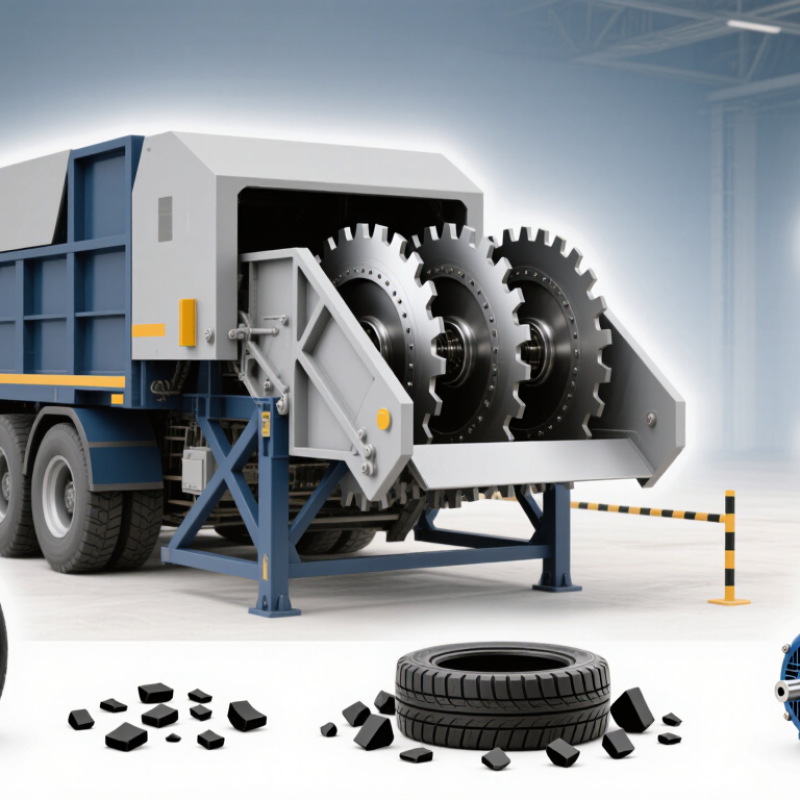
Choosing the 2026 best Rubber Tire Shredder for sale is not simply a matter of comparing motor power or purchase price. The right machine must match the tires you process, your expected daily volume, and the size of the output material. A passenger tire and a heavy truck tire place different demands on the cutting system. Small details matter.

This guide introduces practical factors buyers should examine before requesting a quote. These include feed opening dimensions, shaft design, motor configuration, throughput claims, maintenance access, and the availability of replacement blades. Ask suppliers how they test capacity and what material conditions their figures assume. A number without context can mislead.

Look closely at the working environment, too. Can operators safely reach inspection points? Is there room to handle finished chips and remove tangled material? These questions may sound ordinary. They are important. A machine that fits the brochure may not fit your workflow.

No single shredder suits every recycling operation, and advertised performance should be verified against your own requirements. I would compare specifications carefully, then ask for references or a demonstration using similar tires. That extra step takes time. It can reveal gaps in a sales promise before they become costly problems. The sections ahead offer a clear framework for evaluating available machines, weighing useful features against service needs, and deciding which Rubber Tire Shredder deserves a closer look in 2026.
2026 Best Rubber Tire Shredder for Sale?

Define Tire Feedstock and End Use Using ASTM D6270 Scrap-Tire Guidance

2026 Best Rubber Tire Shredder for Sale?

Choosing a tire shredder starts with defining the feedstock and its intended use. ASTM D6270 provides guidance for using scrap tires in civil engineering applications; it is not a shredder-selection standard or a universal product specification. Check the project requirements before setting target particle size, steel removal, or throughput. Whole passenger tires, truck tires, and mixed loads can behave differently in the cutting chamber. The wire matters. So does the condition of the tires.

A civil engineering project may require consistent tire-derived aggregate, while another buyer may need smaller, cleaner rubber pieces. Those goals can call for different screening and separation steps. Ask suppliers for sample output data from material similar to yours, then inspect particle size and residual wire. Confirm what the machine can process per hour under realistic conditions, not just ideal test conditions. Small differences in incoming tires can change results. This is easy to underestimate.

Tips: Write down tire types, daily volume, target output, and acceptable steel content before comparing machines. Treat ASTM D6270 as application guidance, and verify detailed specifications with the project engineer. Keep a sample of the finished material for review. One sample is useful, though it may not represent every load.
Compare Shredder Designs for Tire-Derived Fuel Under ASTM D6700

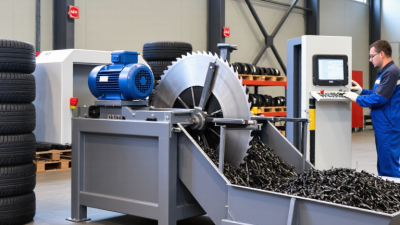
Choosing a rubber tire shredder for tire-derived fuel starts with the boiler’s feed requirements, not the machine’s headline capacity. ASTM D6700 is a guide to TDF use; it does not certify shredders or set one universal chip size. That distinction matters. A low-speed, twin-shaft shear shredder handles whole tires and reinforcement with robust, coarse cuts. A secondary cutter can produce smaller, more even pieces for specific fuel systems. Finer output may improve metering, but it also raises power use and wear. Real trade-offs.

USTMA’s 2023 Scrap Tire Management Report estimated that 304.5 million tires were generated in the United States in 2021. It reported tire-derived fuel use at about 43.7% of that stream. These figures show the scale of TDF demand, but they do not define your equipment specification. Compare measured chip size, throughput on mixed passenger and truck tires, wire separation, and maintenance access. Ask for a test using your actual feedstock. A clean sample can hide trouble. Check output after several hours, not just at startup; wet or heavily reinforced tires can change performance. Confirm particle dimensions and residual-steel limits with the fuel user before selecting the shredder.

2026 Best Rubber Tire Shredder for Sale? Compare Shredder Designs for Tire-Derived Fuel Under ASTM D6700

Illustrative TDF product-size targets by processing stage. The values are nominal inch-to-millimeter conversions, not guaranteed machine outputs or ASTM D6700 requirements.

Primary twin-shaft shredders are commonly selected for coarse tire reduction; secondary shredding and granulation can produce progressively smaller material. Actual particle size depends on machine configuration, screens, tire feed, and operating conditions. Confirm fuel specifications with the end user; ASTM D6700 is a guide for using scrap tires as fuel, not a shredder-output size standard.

Specify Chip Size, Throughput in t/h, and Steel-Wire Separation Needs

2026 Best Rubber Tire Shredder for Sale?

A useful shredder specification starts with the required chip size, not the machine’s headline capacity. Define whether you need rough shreds for further processing or smaller, more uniform chips for a specific use. Ask for the expected size range and the proportion of material that may need another pass. A stated 50 mm output, for example, should come with a clear explanation of how that measurement is taken.

Throughput should be stated in tonnes per hour, but the number needs context. Tire type, feed consistency, knife condition, and screen setup can all affect actual output. Ask whether the quoted t/h figure comes from a continuous run using material similar to yours. A brief demonstration can help. Watch how evenly tires feed, and note whether output slows when the machine meets thicker sections. One test is not a guarantee.

Steel-wire separation deserves equal attention. Clarify whether wire is removed during shredding or by a separate magnetic stage, and ask how clean the rubber output is expected to be. Check where the wire collects and how often operators must clear it. These details affect labor and handling. It is easy to compare prices and overlook them. Share representative tire samples and your target chip size with suppliers before choosing; estimates based on ideal feed may disappoint.

Assess TDF Energy Value Against EPA’s 12,000–16,000 Btu/lb Range

2026 Best Rubber Tire Shredder for Sale?
Assess TDF Energy Value Against EPA’s 12,000–16,000 Btu/lb Range

For tire-derived fuel, energy value matters more than a dramatic shredder specification. The U.S. Environmental Protection Agency’s 2010 Scrap Tires Handbook reports a typical heating-value range of 12,000–16,000 Btu per pound. That is a useful benchmark, not a guarantee for every batch. Tire type, moisture, steel content, and sample preparation can shift laboratory results.

Measure the material, not the sales claim. ASTM D5865 provides a standardized method for determining gross calorific value in solid fuels. Ask for test results that state the sample’s moisture basis and describe how it was prepared. Keep a representative sample from several parts of the pile; one clean piece may not reflect a full production run. Small detail. Big difference.

A shredder can influence particle size and help separate steel, but it does not create extra energy in the rubber. Check that the output suits the receiving facility’s size limits and feeding system. Record throughput, downtime, and contamination during a real operating shift. Then compare the test result with the EPA range. It may be lower than expected. That deserves investigation, not a quick promise of better performance.

2026 Best Rubber Tire Shredder for Sale? - Assess TDF Energy Value Against EPA’s 12,000–16,000 Btu/lb Range
Evaluation dimension Reference data or practical range What to check when selecting a shredder
TDF heating-value benchmark 12,000–16,000 Btu/lb, equivalent to approximately 27.9–37.2 MJ/kg. Use this as a screening range, not a guaranteed output. Actual fuel value depends on tire composition, contamination, moisture, and the fuel-testing method.
Feedstock Whole tires or pre-cut tire sections; passenger, truck, and mixed tires differ in size, mass, and steel reinforcement. Confirm the machine’s permitted tire types and maximum feed dimensions. Mixed or truck-tire processing may require a heavier-duty configuration.
Target chip size TDF specifications vary by end user; commonly requested products include chips around 1–3 inches, with finer sizes available from additional processing. Match the screen and cutting arrangement to the receiving facility’s written fuel specification. Do not assume one chip size meets every kiln or boiler requirement.
Steel removal Tire wire and bead steel remain in the material unless separated during or after processing. Check whether the line includes magnetic separation and whether the customer sets limits for residual metal. Ask for test results on the finished product.
Fiber removal Textile fiber may be present in passenger-tire output; separation requirements depend on the buyer and process. Confirm whether fiber separation is included, optional, or handled downstream, and establish an acceptance test for the delivered fuel.
Moisture and cleanliness Water, soil, and other contamination can affect usable energy per delivered pound and fuel handling. Keep feedstock clean and dry where practicable. Compare heating-value results on the same basis (for example, as-received versus dry basis).
Throughput Capacity is application-specific and varies with tire mix, desired chip size, steel removal, operating hours, and material handling. Request a throughput guarantee for the actual feedstock and target product—not an unqualified maximum rate. Clarify whether quoted capacity includes downstream separation.
Energy-value verification A representative laboratory analysis is needed to establish the finished TDF’s heating value. Ask for the sampling plan, test method, reporting basis, and recent product results. Compare the measured value with the 12,000–16,000 Btu/lb benchmark.
Ownership and operating cost Electricity or fuel use, cutting-tool wear, maintenance, labor, and downtime vary by system and operating conditions. Compare total cost per ton of saleable, specification-compliant TDF. Include screens, wear parts, magnets, dust control, and service requirements.
Buyer and regulatory fit Fuel acceptance criteria and applicable environmental requirements depend on the facility, location, and intended use. Obtain the end user’s current written specification and confirm applicable permits and requirements before purchasing or commissioning equipment.

Check 2026 Shredder Safety Controls Against ISO 12100 Risk-Assessment Principles

A 2026 rubber tire shredder should be assessed by its hazards, not just its rated throughput. ISO 12100 provides a risk-assessment framework: identify hazards, estimate and evaluate risks, then reduce them. For a tire shredder, inspect the feed opening, cutting chamber, discharge area, and access points during cleaning or maintenance.

Look for fixed guards around moving parts and interlocked access doors that stop hazardous motion when opened. Emergency stops should be reachable from normal operating positions, clearly marked, and tested under a documented procedure. Controls should prevent unexpected restarting after a power interruption. Small details count: a jammed tire can store force, and a worker reaching toward the rotor faces a different risk than an operator at the control panel.

Risk reduction should begin with safer design, then use safeguards, followed by clear instructions for remaining risks. Lockout procedures, training, and regular checks support those controls; they do not replace guarding. Dust, noise, and awkward lifting also deserve attention. A checklist can miss real working conditions. Observe actual feeding and clearing tasks, record who may be exposed, and review the assessment whenever the machine, material, or workflow changes.